How to Open a Bottle of Wine
 By
By 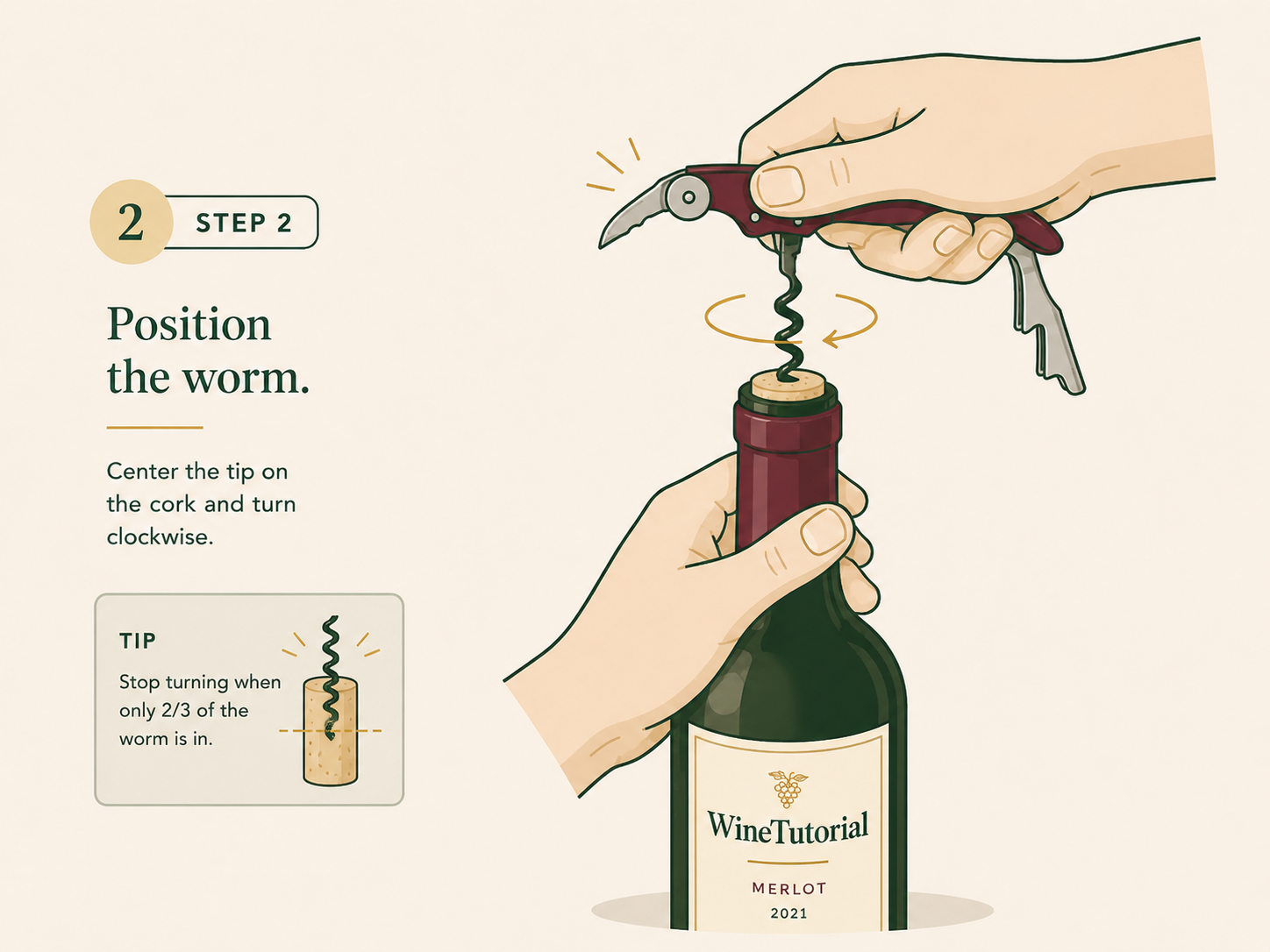
Position the worm
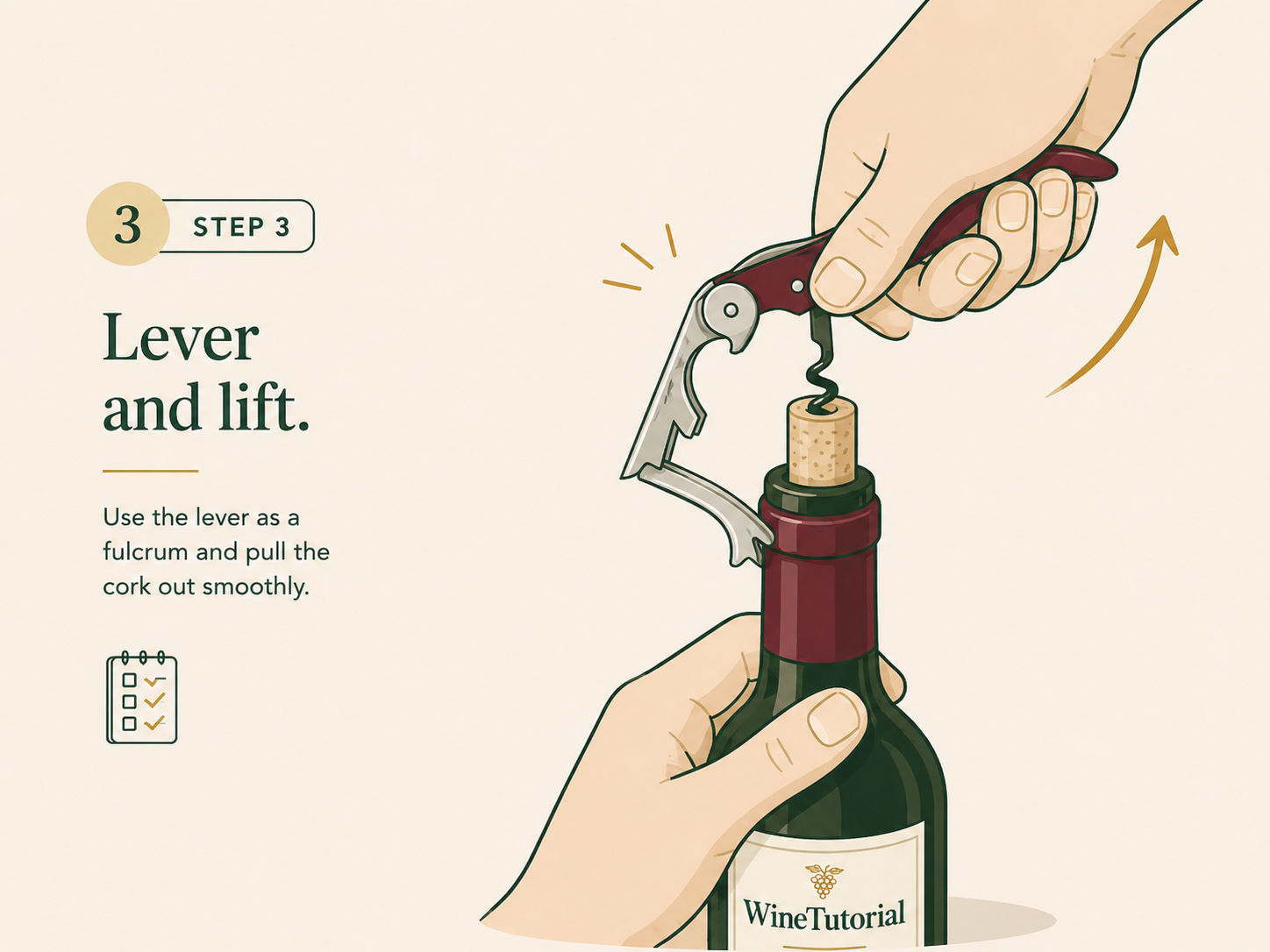
Lever and lift
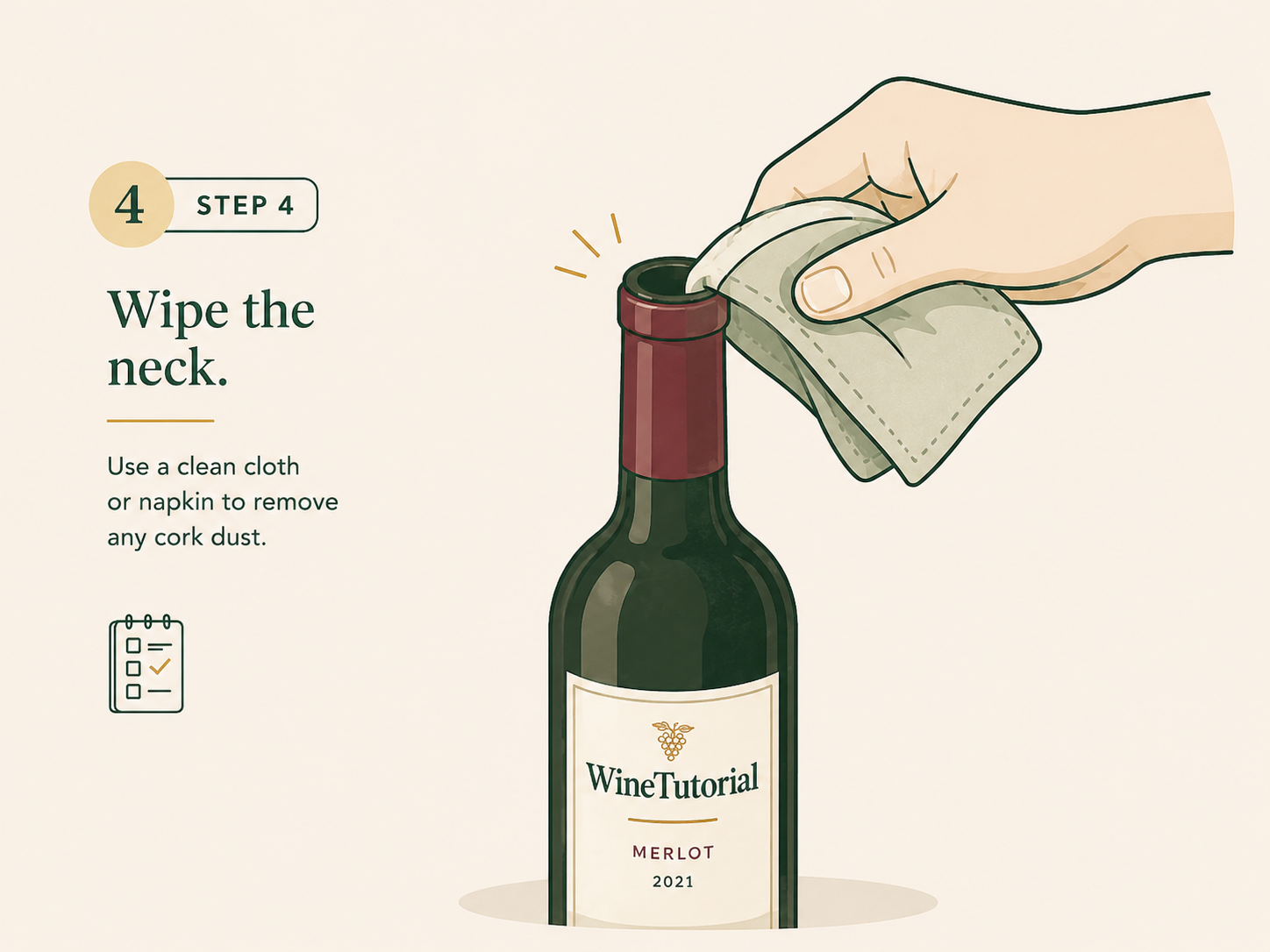
Wipe the neck
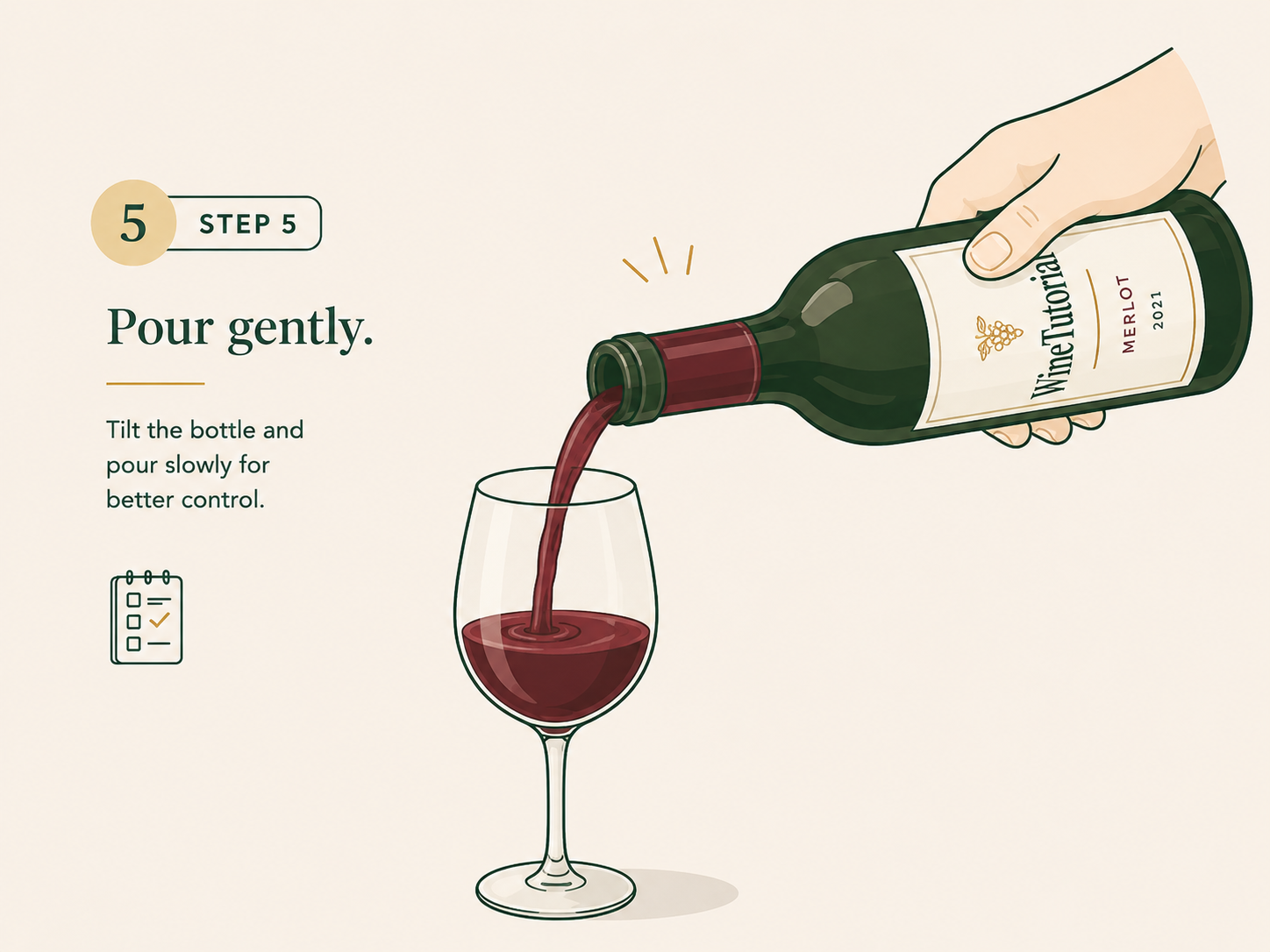
Pour gently
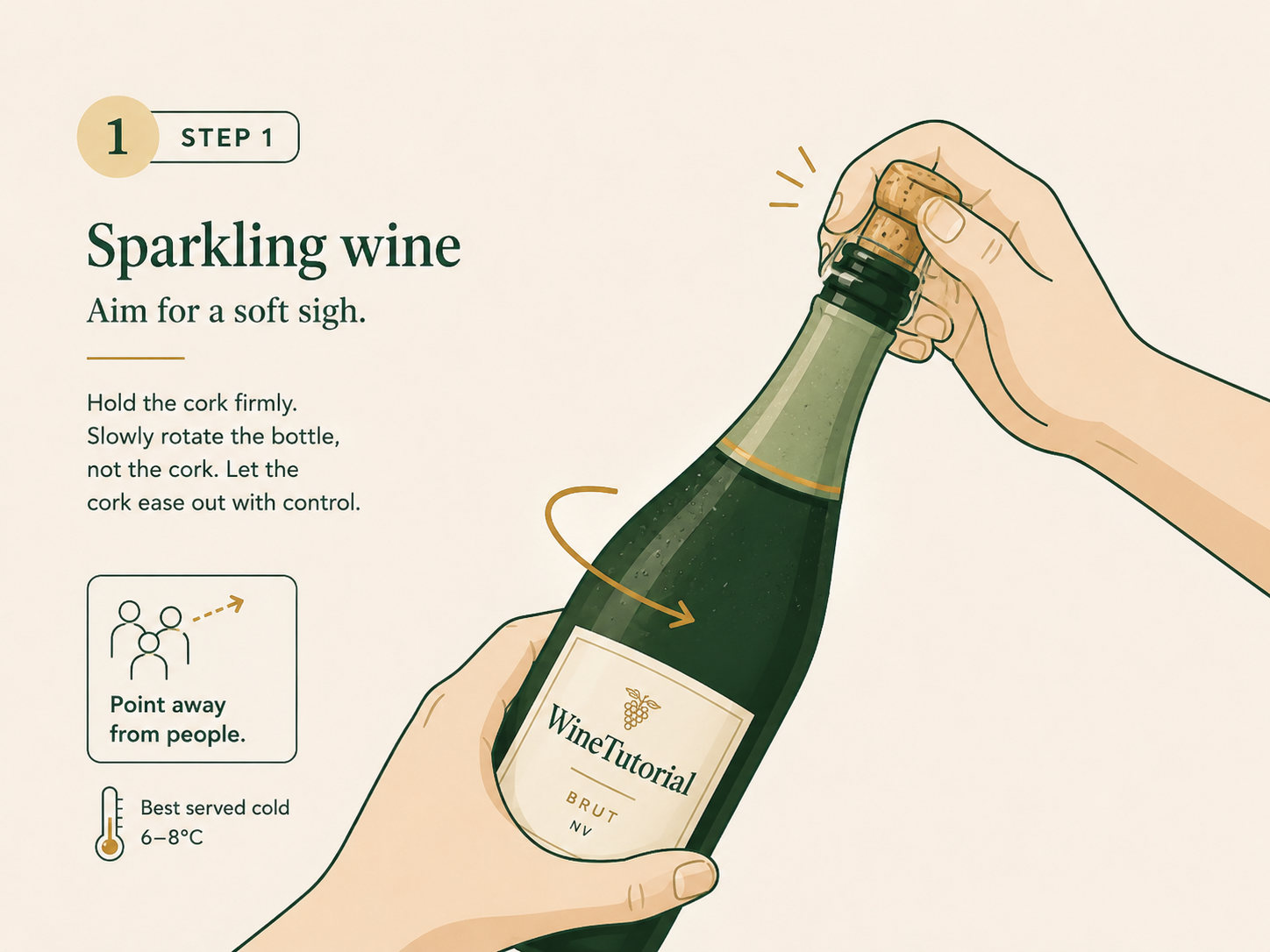
Sparkling wine
Opening a bottle of wine does not require special equipment or practice — just a few practical steps. Here is how to open still and sparkling wine bottles safely and cleanly.
Opening a Still Wine Bottle (Cork)
The most common tool for opening a corked bottle is a waiter's friend — a folding lever-style corkscrew that fits in a pocket and handles most bottles reliably.
- Remove the foil. Using the small blade or foil cutter on the waiter's friend, cut the foil below the lower lip of the bottle's neck. Remove the foil cap and set it aside.
- Position the worm. Center the tip of the corkscrew worm on the middle of the cork. Turn clockwise, pressing gently downward as you turn. Stop before the worm goes all the way through the cork — driving the tip into the wine can push cork fragments into the bottle.
- Lever and lift. Hook the first notch of the lever onto the rim of the bottle and use it as a fulcrum to pull the cork partway up. Then hook the second notch (if your opener has two) for a smoother final pull. The cork should come out cleanly.
- Wipe the neck. Use a cloth or napkin to wipe the inside of the bottle neck if needed, particularly for older bottles that may have cork dust or sediment near the opening.
- Pour gently. Tilt the bottle at a moderate angle and pour slowly, especially with older wines that may have sediment.
Synthetic Corks and Screw Caps
Synthetic corks are made from plastic or composite materials and open the same way as natural cork. They tend to grip the corkscrew differently — you may need a firm, steady pull.
Screw caps require no corkscrew. Simply hold the bottle firmly and unscrew the cap counterclockwise. Screw caps are increasingly common for everyday wines and for wines intended to be consumed young. They provide a consistent, airtight seal and have no effect on wine quality.
Opening Sparkling Wine
Sparkling wine bottles are under significant pressure — a standard bottle can hold around 90 psi. Handle carefully.
- Keep the bottle cold. A warm sparkling wine bottle is more likely to open violently. Serve well-chilled (around 40–45°F / 4–7°C).
- Point away from people. Aim the bottle at a safe angle — away from people, windows, and fragile objects — before removing the cage.
- Remove the foil and cage. Peel back the foil. Untwist the wire cage counterclockwise six half-turns and loosen it. Keep your thumb or palm firmly over the top of the cork at all times while doing this — the cork can move unexpectedly once the cage is loosened.
- Rotate the bottle, not the cork. Grip the cork firmly with one hand. With your other hand, hold the base of the bottle and rotate the bottle slowly while applying gentle upward pressure on the cork. Let the pressure push the cork out gradually.
- Aim for a soft sigh. The cork should ease out with a gentle sigh rather than a loud pop. A dramatic pop wastes bubbles and risks spills or injury. A quiet release preserves the wine's effervescence and is easier to control.
If the cork will not move: gently warm the neck of the bottle in your hands for a moment. The slight warming expands the glass and can help loosen the cork. Do not apply heat directly.
Stuck Corks
Occasionally a cork will crumble or refuse to come out cleanly. A few options:
- Two-pronged cork puller (Ah-So): This tool slides two thin prongs alongside the cork and twists it out without a corkscrew worm. Particularly useful for old, fragile, or crumbling corks.
- Partially crumbled cork: If pieces of cork fall into the wine, push the remaining fragments into the bottle with a clean object (a pen or chopstick works) and pour the wine through a coffee filter or fine strainer into a carafe or pitcher. The wine is unaffected; only the cork is inconvenient.
Practical Tip
Store your corkscrew somewhere easy to find before you need it. Running out of places to look when a bottle is waiting is an avoidable frustration.
Go deeper
Reference entries at EncyclopediaOfWine.