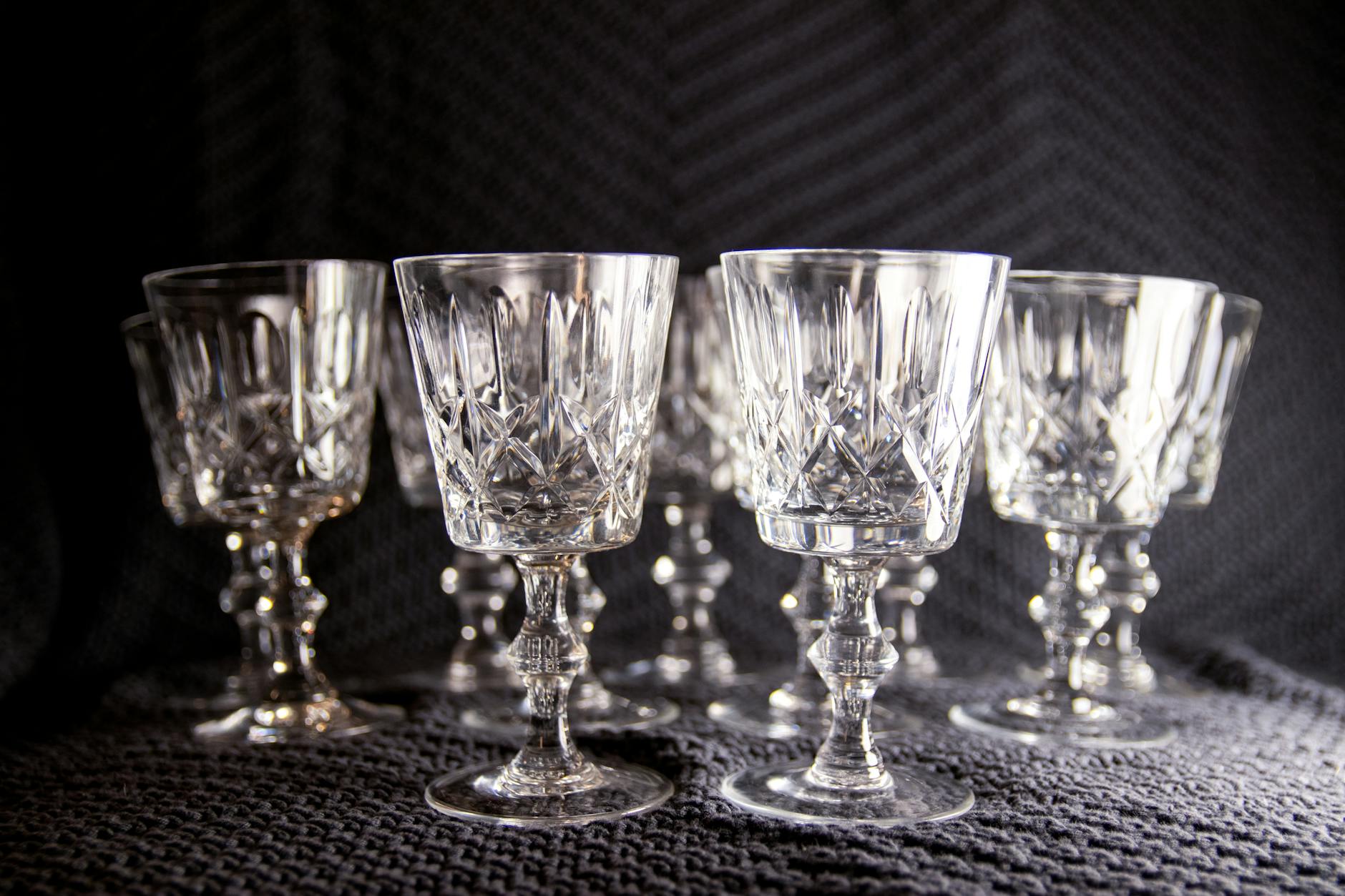
Why Glass Shape Matters
The shape of a wine glass does two things: the bowl concentrates aromas toward the opening, and the rim directs the wine to different parts of your palate as you drink. A wider bowl creates more surface area for the wine to interact with air, releasing more volatile aromatic compounds. A narrower opening channels those aromas toward your nose.
That said, the practical difference between a good general-purpose glass and a highly specialized one is smaller than wine marketing often implies. A clean, medium-sized glass with a tulip shape is perfectly fine for almost any wine.
Red Wine Glasses
Red wine glasses typically have a larger, rounder bowl and a wider opening. The extra surface area allows fuller-bodied red wines — Cabernet Sauvignon, Syrah, Malbec — to breathe more, softening tannins and allowing complex aromas to develop. The wider rim also allows you to tilt the glass more, which brings the wine to different areas of the palate. For lighter reds like Pinot Noir or Gamay, a slightly smaller bowl than a Cabernet glass is sometimes recommended, though most people find a general-purpose large glass works well for both.
White Wine Glasses
White wine glasses are typically smaller and narrower than red wine glasses. The reduced surface area slows warming and helps preserve the wine's fresh, aromatic character. A smaller bowl also helps direct aromas toward the nose more efficiently for wines like Riesling, Sauvignon Blanc, or Pinot Grigio, which rely heavily on delicate aromatics. Fuller-bodied whites like oaked Chardonnay can work well in a slightly larger glass.
Flutes and Sparkling Wine Glasses
The classic flute — tall and narrow — is designed to preserve bubbles and showcase the bead (the stream of rising bubbles) in sparkling wine. The narrow shape slows the release of CO₂, maintaining effervescence longer in the glass. In recent years, wider-rimmed flutes and tulip-shaped sparkling wine glasses have become popular. They allow more aromatic expression, which is particularly useful for complex sparkling wines made by the traditional method. A wider tulip shape is a good all-around compromise.
Universal / All-Purpose Glasses
A medium-sized glass with a tulip shape — where the bowl curves inward slightly toward the rim — works reasonably well for red wines, white wines, and even sparkling wines. If you want one glass that handles everything, a quality all-purpose glass is the practical choice. Many everyday drinkers find that a single good glass type covers every situation.
You Do Not Need Multiple Sets
Wine glass marketing can make it seem like a different glass for every grape variety is essential. It is not. The most important factors are that the glass is clean, large enough to swirl without spilling, and made of clear glass so you can see the wine. Any clean, medium-sized wine glass is perfectly fine for any wine.
Washing and Care
Hand washing with a small amount of unscented dish soap and rinsing thoroughly is the most reliable method. If using a dishwasher, use a gentle cycle and remove the glasses promptly to avoid water spots and heat damage. Air drying on a rack is fine; polishing with a lint-free cloth removes any streaks or water spots. Soap residue or detergent fragrance left in the glass can subtly affect the taste and aroma of the wine — rinsing well matters.