Storing an Open Wine Bottle
 By
By 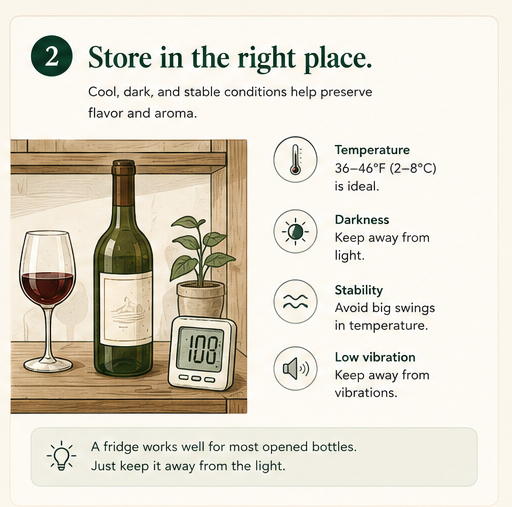
Store in the right place
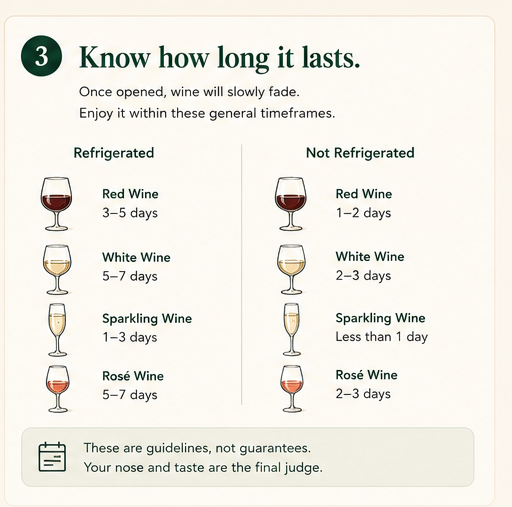
Know how long it lasts
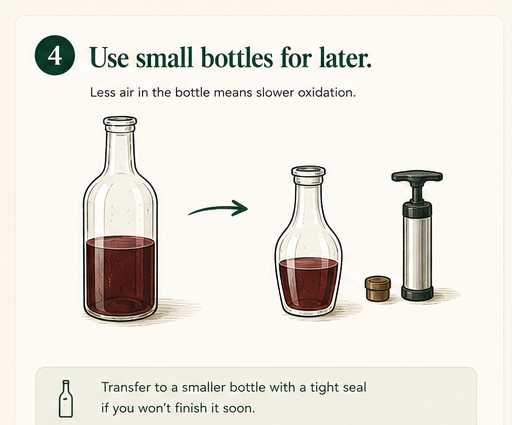
Use small bottles for later
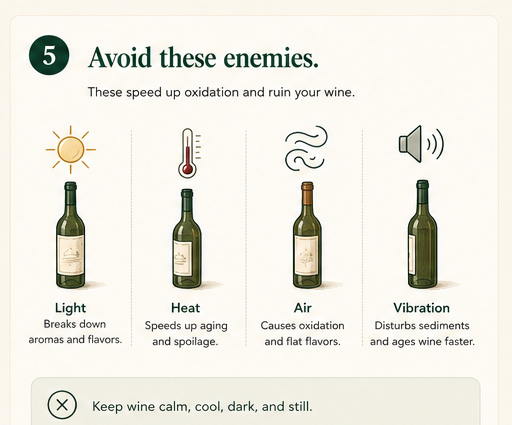
Avoid these enemies
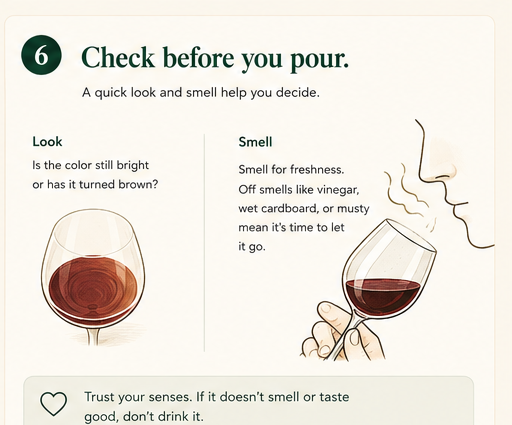
Check before you pour
An open bottle doesn't have to go to waste. Here are practical options for keeping wine fresh for a few more days.
Once a bottle is opened, exposure to air begins to change the wine. With the right approach, you can keep an open bottle enjoyable for a few more days.
What Happens When Wine Is Exposed to Air
The culprit is oxidation. Oxygen reacts with the compounds in wine, changing its character over time. In small amounts, this is actually beneficial — it's why wine benefits from breathing in the glass. But sustained exposure to air will eventually turn wine flat, then vinegary.
The rate at which this happens depends on the wine. A light, delicate white might begin to fade within 24 hours of opening. A robust red with high tannins and good structure might hold up for three or four days. Fortified wines like Port and Sherry last much longer — weeks or even months — because their higher alcohol content acts as a preservative.
Basic Approach: Recork and Refrigerate
The simplest way to extend an open bottle's life is to replace the cork (or use a wine stopper) and put the bottle in the refrigerator. Cold slows the oxidation process. This works for both red and white wine. Reds can come back to room temperature before serving — 20 to 30 minutes out of the refrigerator is usually enough.
A refrigerated, recorked bottle will typically keep for 2–3 days for lighter wines, up to 4–5 days for fuller-bodied reds.
Vacuum Pumps
Wine vacuum pumps remove air from the bottle before resealing. They are inexpensive, widely available, and add a day or two to an open bottle's drinkable life. They work by extracting oxygen from the headspace above the wine.
A vacuum pump is a practical tool for anyone who regularly drinks wine by the glass rather than finishing bottles in one sitting.
Inert Gas Systems
A more effective approach is to use a can of inert gas — typically a mixture of nitrogen, argon, and carbon dioxide — which is sprayed into the bottle before resealing. These odorless, tasteless, non-reactive gases displace the oxygen in the bottle, dramatically slowing oxidation.
Inert gas preservation can keep an open bottle in good condition for a week or longer. The gas canisters are available at wine shops and online and are reusable across many bottles.
Half-Bottles
If you frequently find yourself with leftover wine, keep a clean 375ml half-bottle on hand. Transferring leftover wine into a smaller bottle reduces the amount of air in contact with the wine, extending its life without any additional equipment.
Go deeper
Reference entries at EncyclopediaOfWine.