How to Store Wine
 By
By 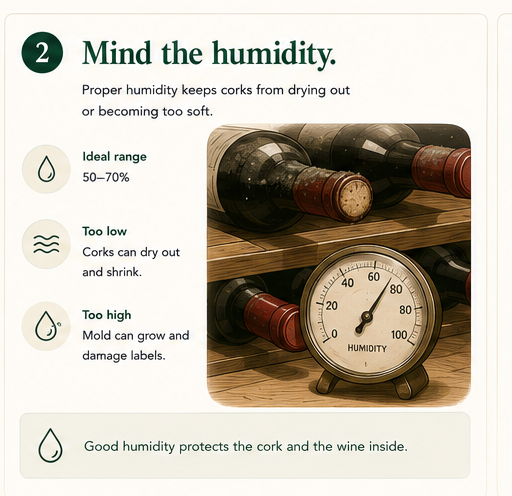
Mind the humidity
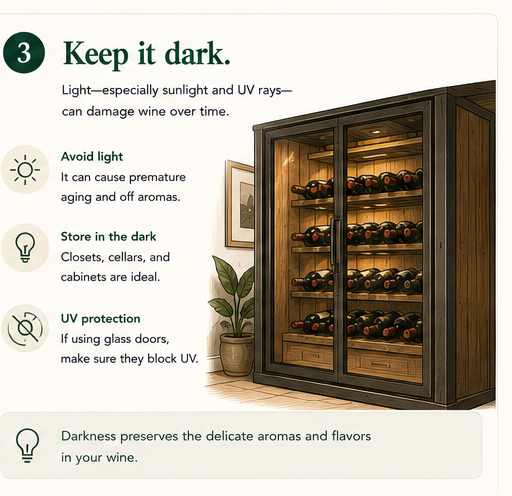
Keep it dark
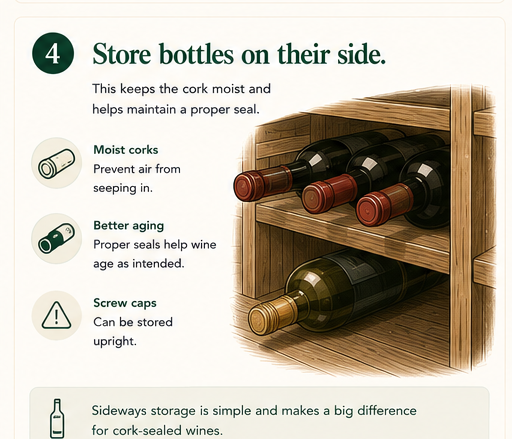
Store bottles on their side
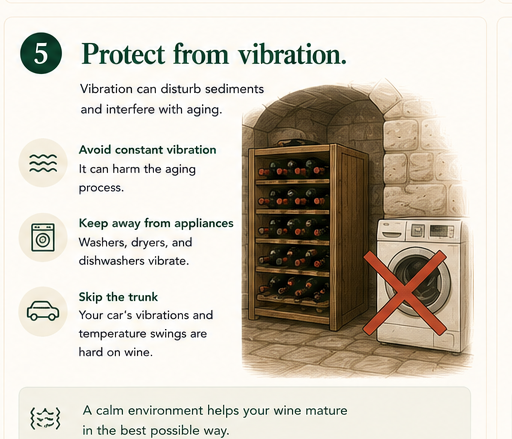
Protect from vibration
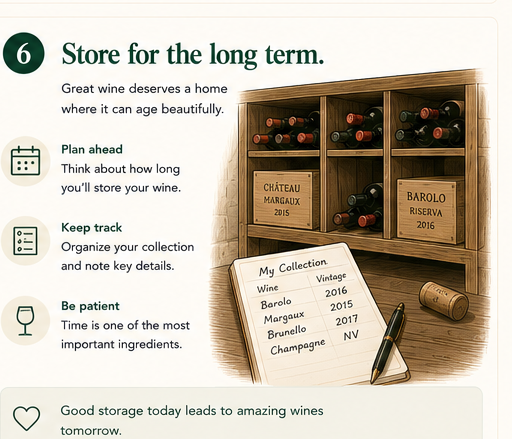
Store for the long term
You don't need a wine cellar to store wine well. A few simple rules about temperature, light, and position make all the difference.
Proper wine storage isn't complicated, but a few basic mistakes can ruin a bottle faster than almost anything else. The principles apply whether you're keeping a case for a month or aging bottles for a decade.
Keep It Cool and Dark
Heat is wine's greatest enemy. Temperatures above 70°F (21°C) over time accelerate aging and can "cook" a wine, stripping it of its complexity and freshness. The ideal storage temperature is between 45°F and 65°F (7°C and 18°C), with 55°F (13°C) often cited as optimal for long-term aging.
Light — especially UV light — also degrades wine. This is why wine bottles are typically made from tinted glass, and why wine racks are usually kept away from windows. Fluorescent lights can also cause problems with prolonged exposure; incandescent or LED lighting is less damaging.
Humidity matters less for the casual collector, but very dry conditions (below 50% relative humidity) can cause corks to dry out and shrink, letting air in. If you're storing wine long-term, a humidity level between 60% and 70% is comfortable for the wine — and, conveniently, for the space as well.
Keep It Sideways
Store corked bottles on their sides. This keeps the cork in contact with the wine, preventing it from drying out and shrinking. A dried cork lets in air, which will oxidize and eventually ruin the wine. Screw-cap bottles can be stored upright without this concern.
Where to Store
You don't need a cellar. Options that work well:
- Wine refrigerator: The most reliable solution for most people. Available in a wide range of sizes, from a six-bottle countertop unit to a built-in cabinet holding 200+ bottles. Look for one with temperature zones if you want to store both reds and whites at optimal temperatures simultaneously.
- Interior closet or cabinet: Away from exterior walls, away from the kitchen heat, away from light. A closet under the stairs or an interior bedroom closet often works reasonably well in a climate-controlled home.
- Basement: A naturally cool, dark, and humid basement is ideal — if it stays at a consistent temperature year-round. Basements that swing dramatically between seasons are less suitable.
Practical Tips
- Avoid storing wine on top of the refrigerator — it's warm up there, and the vibration from the compressor is not helpful for long-term aging.
- Keep wine away from strong odors. Wine can absorb odors through the cork over time.
- Don't store wine in direct sunlight, even for a short period.
- If you buy wine to drink within a week or two, most of these rules become much less important — enjoy it.
Go deeper
Reference entries at EncyclopediaOfWine.