How to Taste Wine Flavors
Also see: Wine Flavors Explained at EncyclopediaOfWine.com
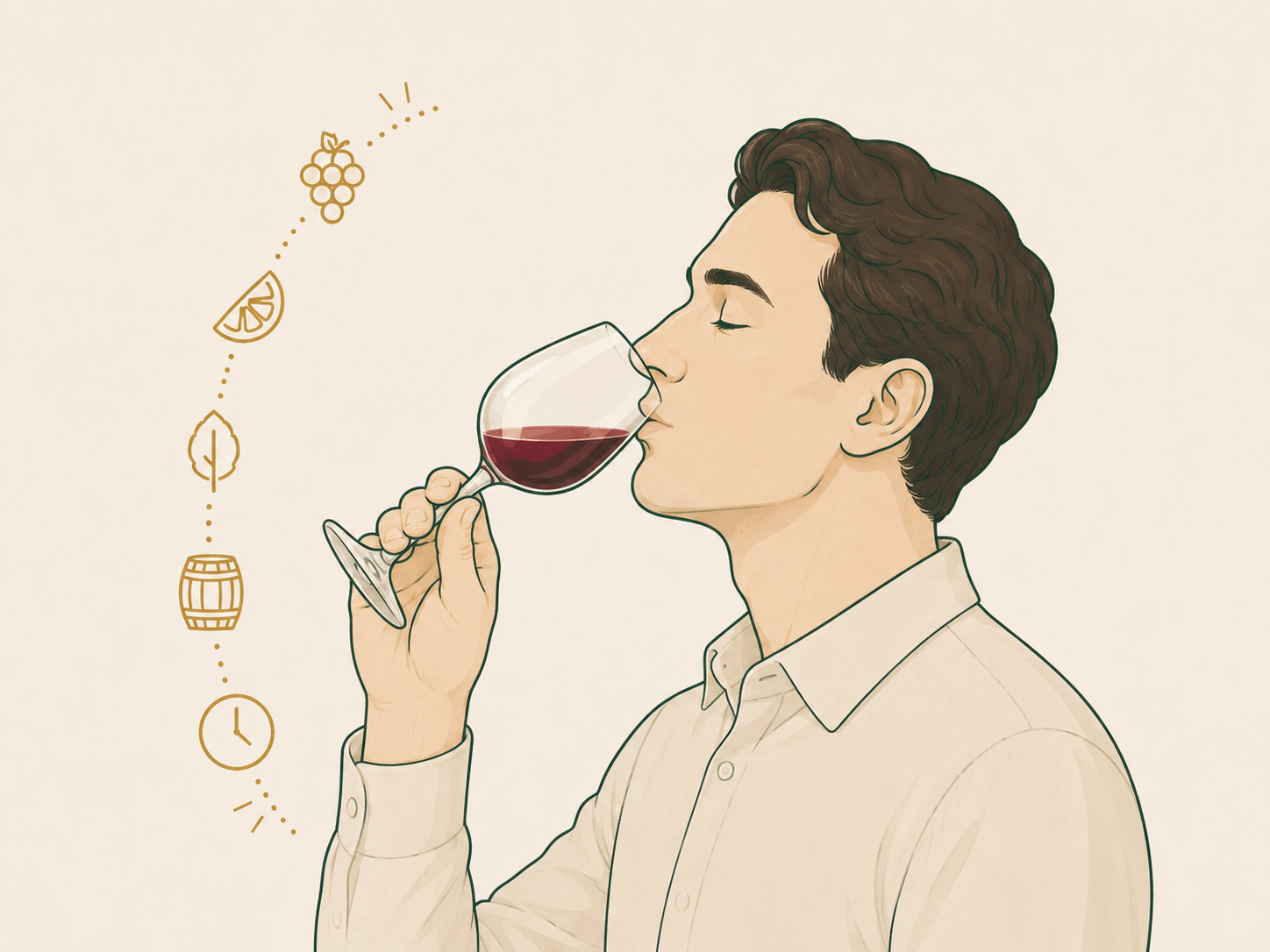
You do not need special talent to taste wine.
You do not need to know every grape, memorize a flavor wheel, or pretend you smell pencil lead because someone else said it first.
You just need to slow down and ask a few simple questions.
Wine tasting is personal. There are no wrong answers. If a wine reminds you of cherry candy, lemon peel, blackberry jam, fresh grass, buttered toast, wet stone, or your grandfather's old leather chair, that is a real tasting note.
This guide will help you turn those impressions into useful words.
Step 1: Look at the Wine
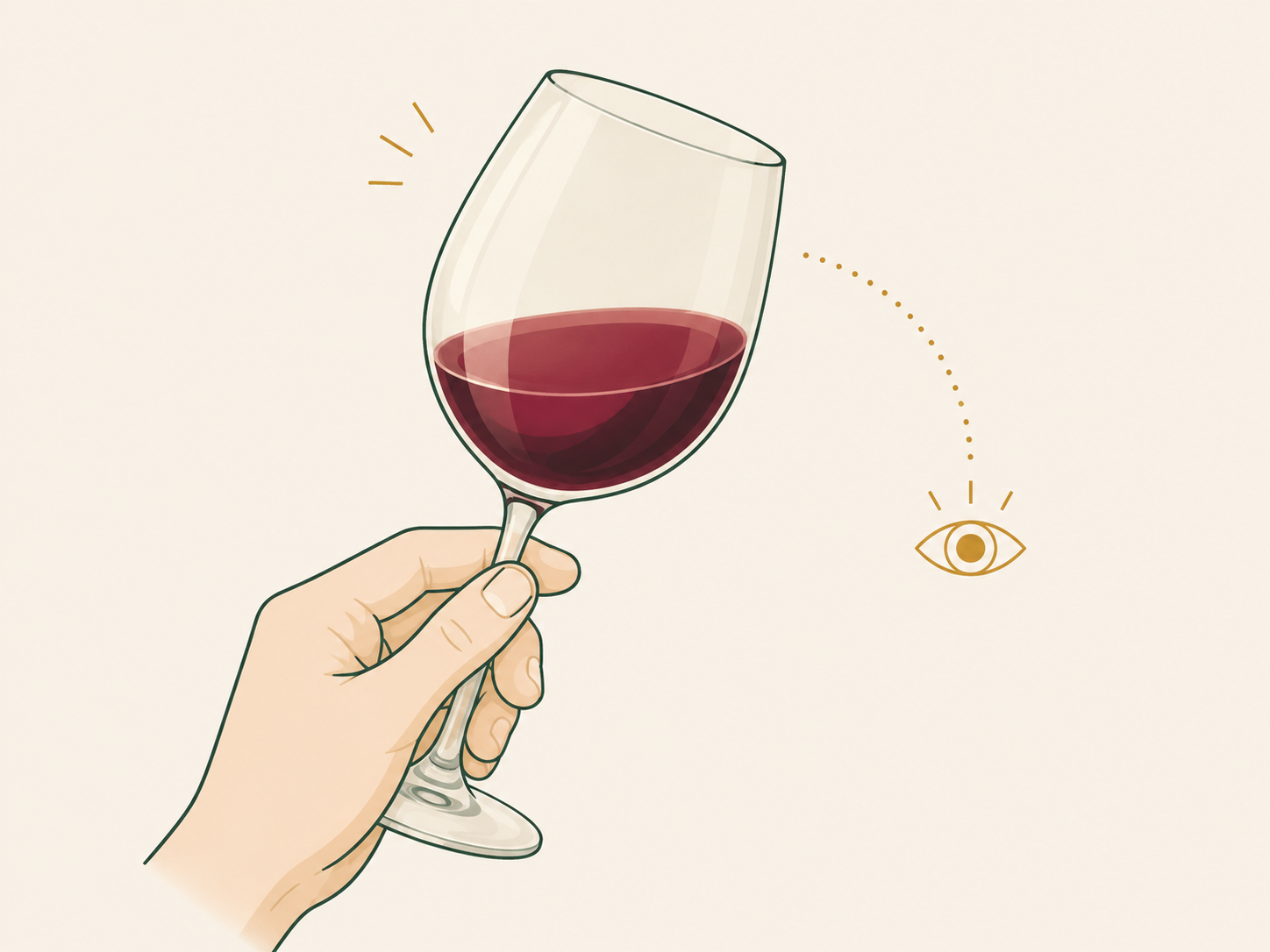
Before smelling or tasting, look at the wine.
You are not trying to solve a mystery. You are just collecting clues.
Ask:
- Is it white, rosé, red, orange, sparkling, or dessert wine?
- Is the color pale, medium, or deep?
- Does it look bright and fresh, or darker and more developed?
- Is it clear, cloudy, still, sparkling, light, or dense-looking?
Color does not tell you everything, but it can set expectations.
A pale white wine may be crisp and citrusy. A deep red wine may be richer, more tannic, and more concentrated. A golden white wine may be oaky, sweet, aged, or made from very ripe grapes.
Not always. But sometimes.
Step 2: Smell Before You Sip
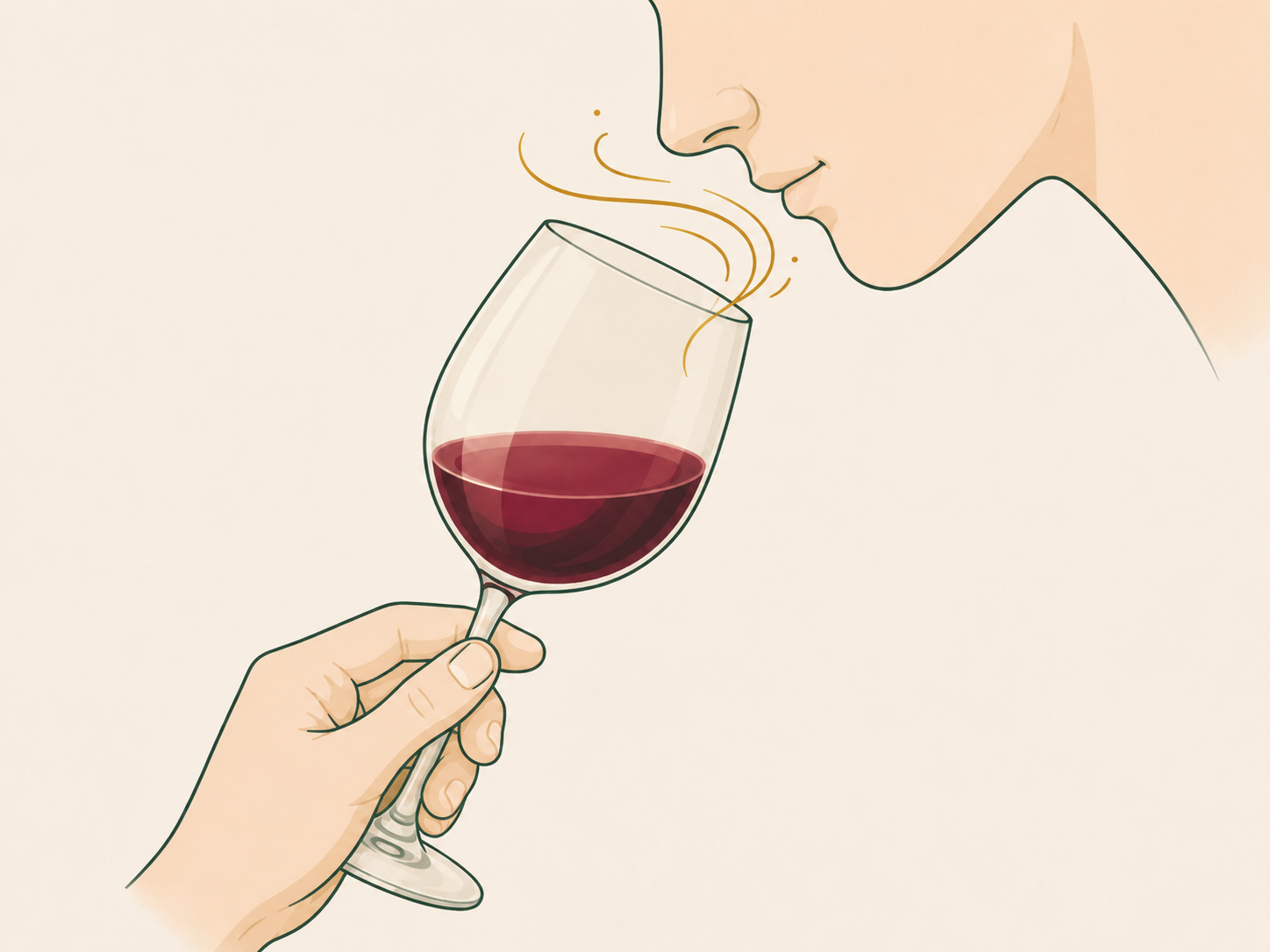
Most of what people call flavor actually comes from smell.
Swirl the glass gently if you can. Then smell the wine.
Do not worry about naming the exact fruit immediately. Start broad.
Ask:
- Is it fruity?
- Floral?
- Herbal?
- Spicy?
- Earthy?
- Oaky?
- Creamy?
- Smoky?
- Sweet-smelling?
- Funky?
- Does anything seem off?
If the first thing you think is "fruit," that is enough. Now narrow it down.
Step 3: Find the Fruit Family
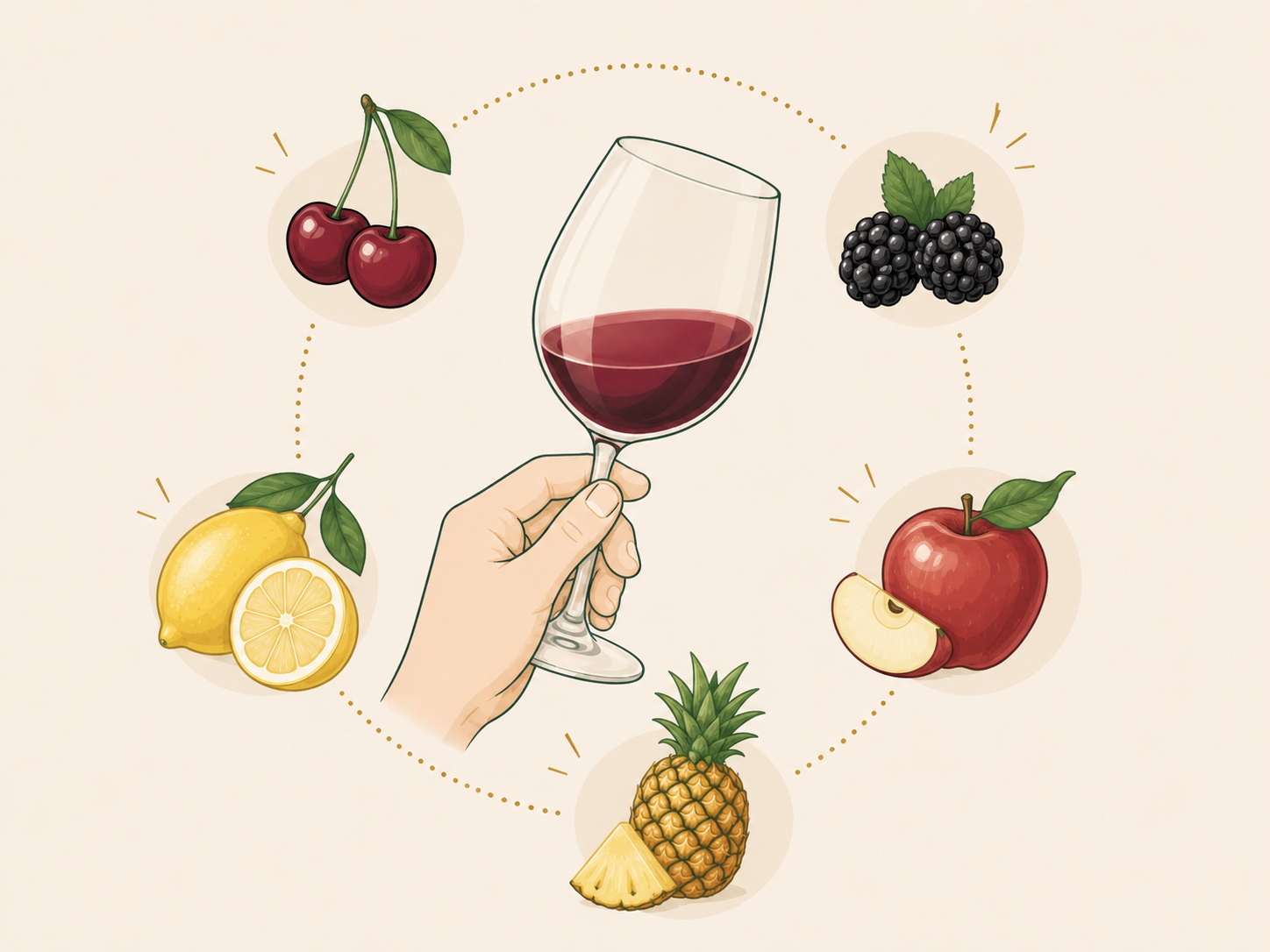
Fruit is the easiest entry point for most beginners.
Use broad families first:
| Fruit Family | Examples | Common Wine Impression |
|---|---|---|
| Red fruit | Cherry, raspberry, strawberry, cranberry | Tart, bright, juicy, fresh |
| Black fruit | Blackberry, black cherry, plum, cassis | Darker, richer, deeper |
| Blue fruit | Blueberry, boysenberry, black raspberry | Plush, ripe, smooth |
| Citrus | Lemon, lime, grapefruit, orange peel | Bright, sharp, zesty |
| Orchard fruit | Apple, pear, quince | Crisp, clean, fresh |
| Stone fruit | Peach, apricot, nectarine | Round, ripe, aromatic |
| Tropical fruit | Pineapple, mango, passion fruit, guava | Ripe, warm, lush |
| Melon | Honeydew, cantaloupe, watermelon | Soft, juicy, refreshing |
| Dried fruit | Raisin, fig, prune, dried cherry | Rich, aged, sweet, concentrated |
| Cooked fruit | Jam, compote, pie filling, baked apple | Ripe, warm, sometimes high-alcohol |
If you cannot name the exact fruit, describe the style of fruit.
Fresh? Tart? Ripe? Jammy? Dried? Cooked? Candied?
"Fresh red fruit" is a perfectly useful tasting note.
Step 4: Taste and Check the Structure
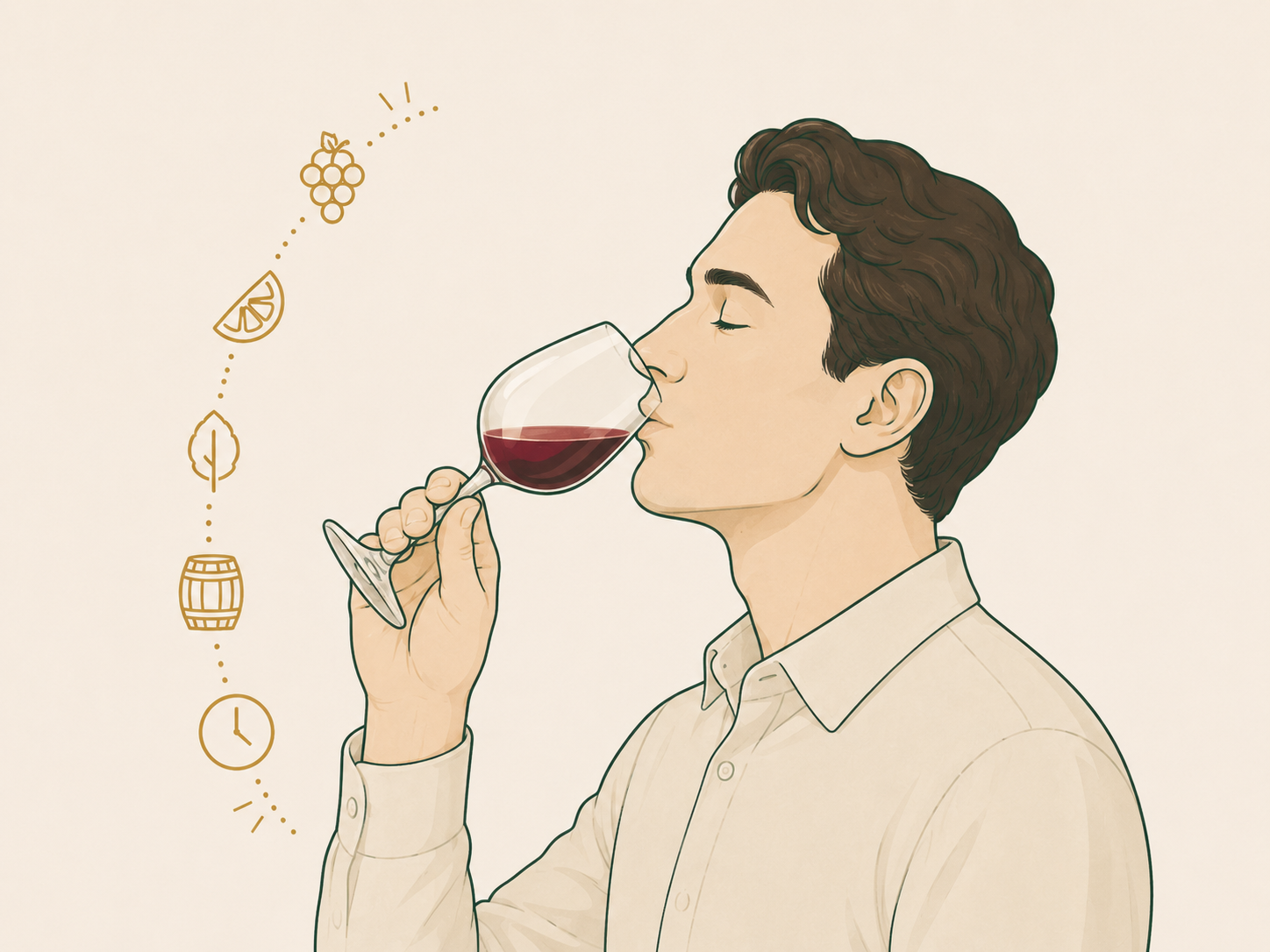
Now take a sip.
Do not swallow immediately. Let the wine move around your mouth for a few seconds.
Pay attention to structure.
Structure is not the flavor itself, but it changes how flavor feels.
Ask:
- Is it sweet or dry?
- Is the acidity low, medium, or high?
- Does it make your mouth water?
- Are there tannins that dry your gums or tongue?
- Is the body light, medium, or full?
- Does the alcohol feel gentle, warming, or hot?
- Do the flavors disappear quickly or linger?
Step 5: Separate Flavor from Texture
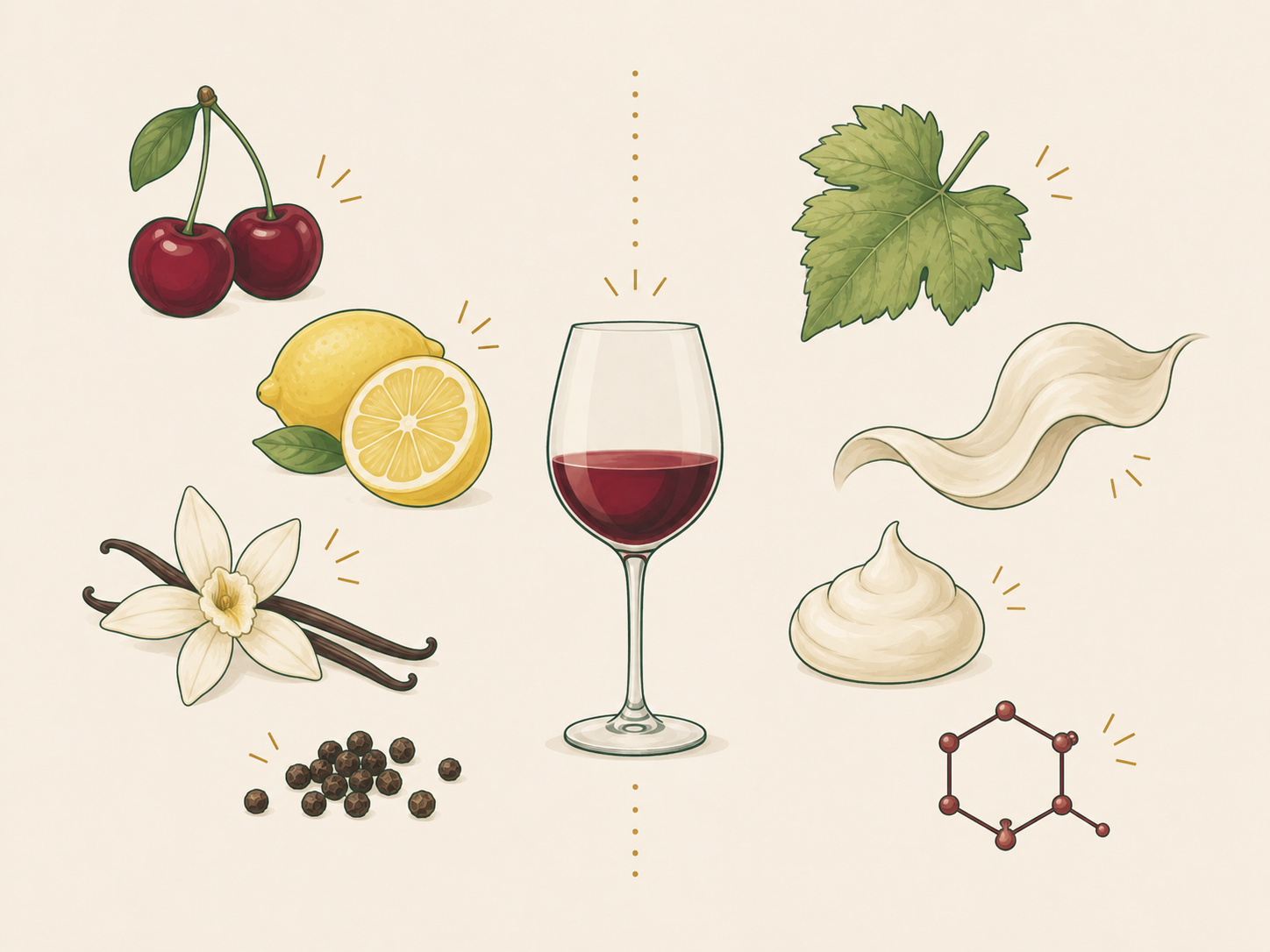
Beginners often mix up flavor and texture. That is normal.
Here is a simple way to separate them:
| What You Notice | Category | Example Words |
|---|---|---|
| What it reminds you of | Flavor | Cherry, lemon, vanilla, pepper, leather |
| How sharp or refreshing it feels | Acidity | Crisp, zesty, tart, mouthwatering |
| How dry or grippy it feels | Tannin | Drying, firm, chalky, chewy, silky |
| How heavy it feels | Body | Light, medium, full, rich |
| Whether sugar is present | Sweetness | Dry, off-dry, sweet, syrupy |
| Whether it feels warm | Alcohol | Gentle, warming, hot |
| How long it lasts | Finish | Short, medium, long |
Step 6: Look for Non-Fruit Flavors
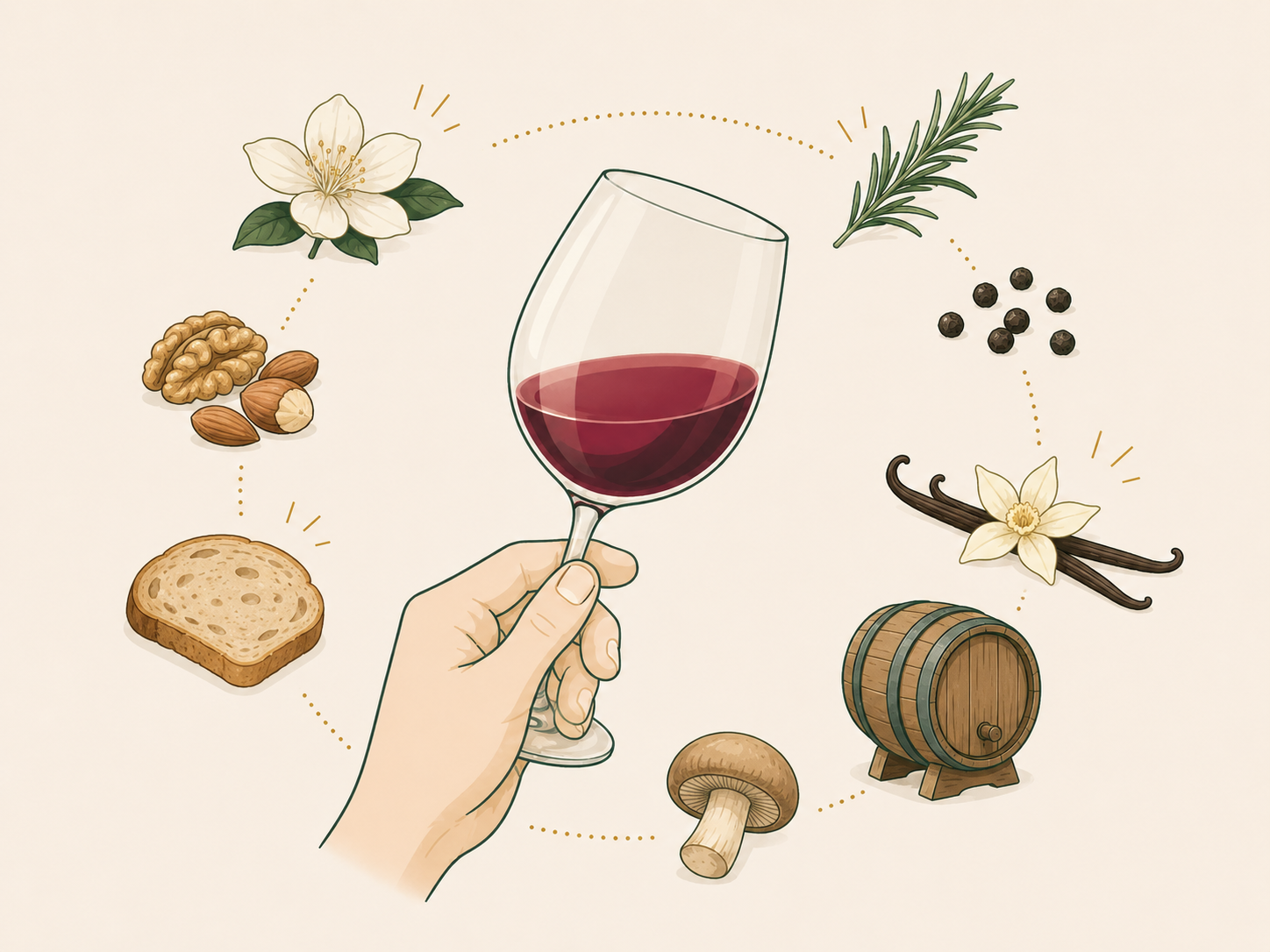
After fruit, check for other families.
Floral
Does it smell like flowers, perfume, or blossoms? Try words like rose, violet, lavender, honeysuckle, jasmine, or orange blossom.
Herbal or Green
Does it remind you of herbs, grass, leaves, or vegetables? Try mint, eucalyptus, grass, bell pepper, tomato leaf, jalapeño, sage, thyme, or rosemary.
Spice
Does it feel peppery, warm, sweetly spiced, or licorice-like? Try black pepper, white pepper, clove, cinnamon, nutmeg, anise, licorice, or ginger.
Oak
Does it remind you of wood, vanilla, toast, coconut, baking spice, cedar, smoke, coffee, or chocolate? That may be oak influence.
Creamy or Buttery
Does the wine feel round, soft, buttery, creamy, or custard-like? That may come from malolactic fermentation, lees aging, or oak influence.
Earthy
Does it remind you of mushrooms, wet leaves, soil, forest floor, beetroot, clay, or damp stone? That is often described as earthy.
Savory
Does it remind you of olives, leather, tobacco, soy sauce, cured meat, black tea, or dried herbs? Those are savory notes.
Nutty
Does it remind you of almonds, hazelnuts, walnuts, marzipan, or toasted nuts? Nutty notes can come from aging, oxidation, lees contact, or certain fortified wine styles.
Step 7: Ask Where the Flavor Might Come From
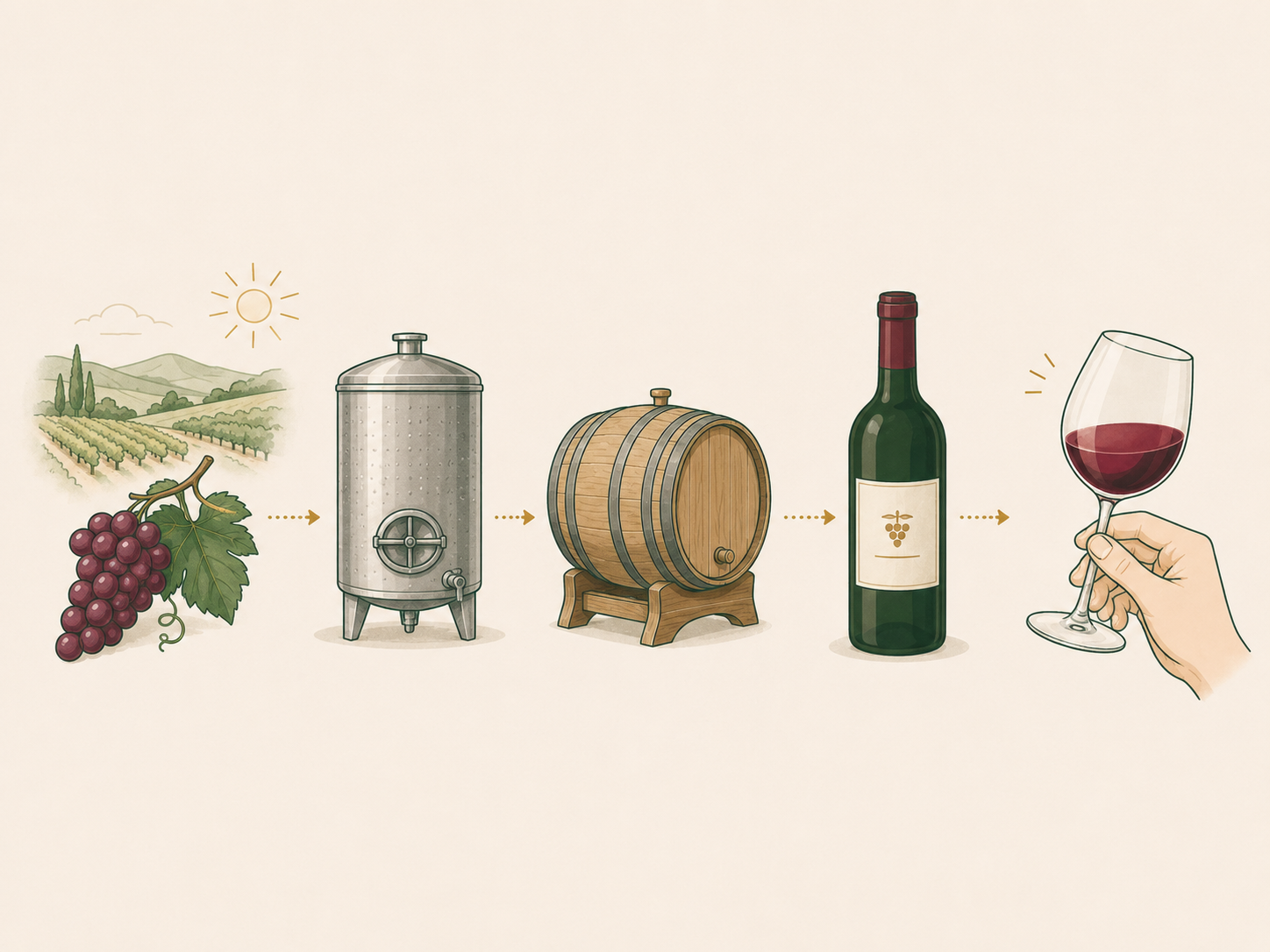
| Flavor Source | What It Often Creates |
|---|---|
| Grape variety | Fruit, flowers, herbs, spice, green notes |
| Climate | Tart fresh fruit in cooler areas; riper fruit in warmer areas |
| Ripeness | Green/tart at lower ripeness; jammy/tropical at higher ripeness |
| Fermentation | Bread, yogurt, banana, spice, floral lift, texture |
| Malolactic fermentation | Butter, cream, softness, roundness |
| Lees aging | Bread, biscuit, cream, brioche, texture |
| Oak aging | Vanilla, toast, cedar, smoke, spice, coconut, coffee |
| Bottle aging | Dried fruit, leather, tobacco, mushroom, nuts, honey |
| Oxidation | Bruised apple, nuts, caramel, flatness, stale notes |
| Faults or taints | Wet cardboard, vinegar, rotten egg, must, nail polish |
Step 8: Build a Tasting Note
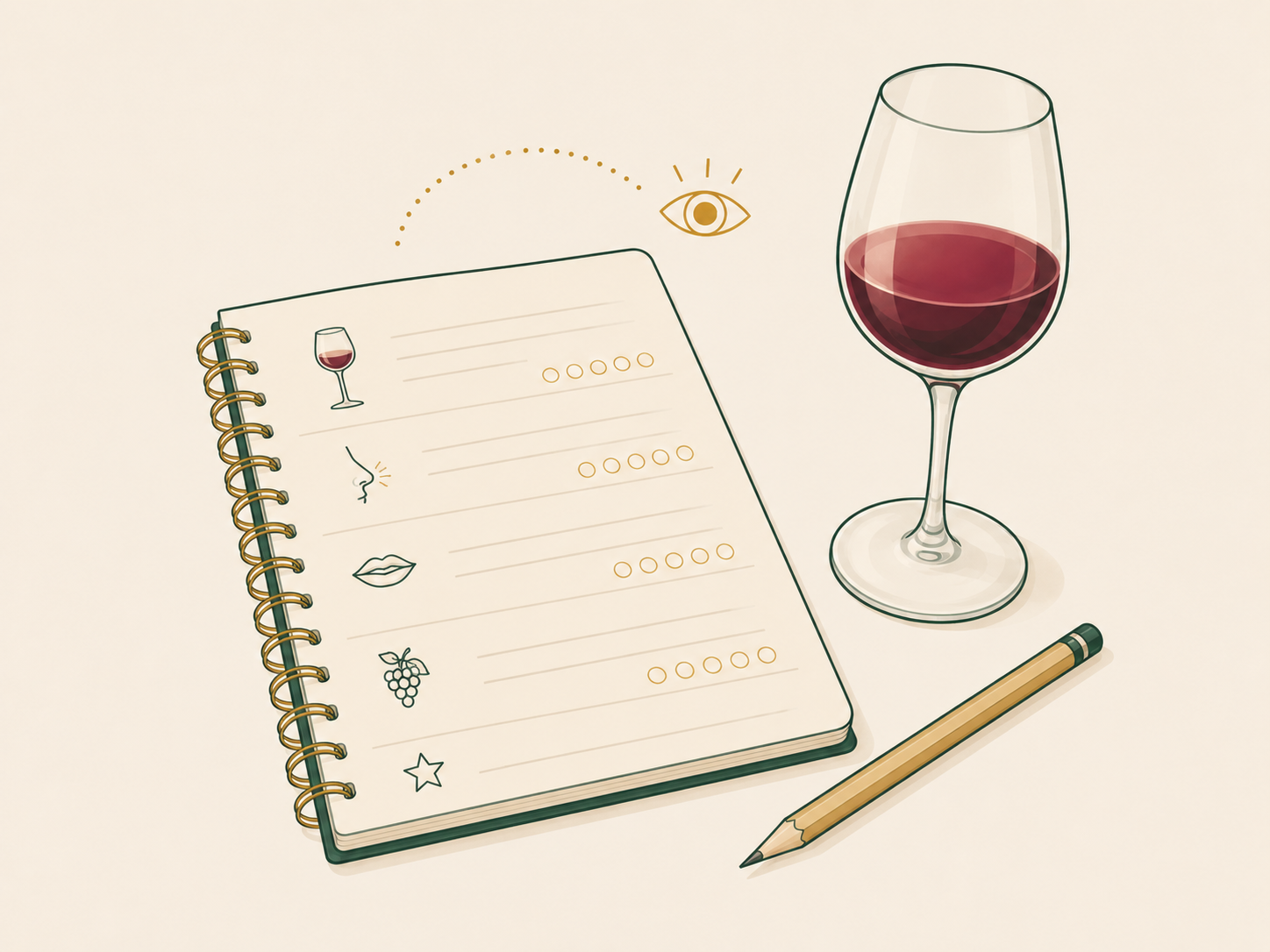
Here is a simple format:
This wine is [structure] with flavors of [fruit] plus [non-fruit notes]. It feels [texture] and finishes [finish].
Simple red wine note:
This wine is dry and medium-bodied with flavors of cherry, raspberry, and a little black pepper. It feels bright and smooth, with a fresh finish.
Richer red wine note:
This wine is full-bodied and dry with flavors of blackberry, plum, vanilla, cedar, and dark chocolate. It has firm tannins and a long, warming finish.
Crisp white wine note:
This wine is dry, light-bodied, and high in acidity with flavors of lemon, grapefruit, green apple, and fresh grass. It feels crisp and refreshing.
Creamy white wine note:
This wine is dry and medium-bodied with flavors of apple, pear, butter, vanilla, and toast. It feels round and creamy, with a soft finish.
Sparkling wine note:
This wine is dry and sparkling with flavors of lemon, green apple, biscuit, and brioche. It feels crisp, bubbly, and clean.
Sweet wine note:
This wine is sweet and full-flavored with notes of honey, apricot, orange marmalade, and caramel. It feels rich but still bright because of its acidity.
Step 9: Use Your Own Words
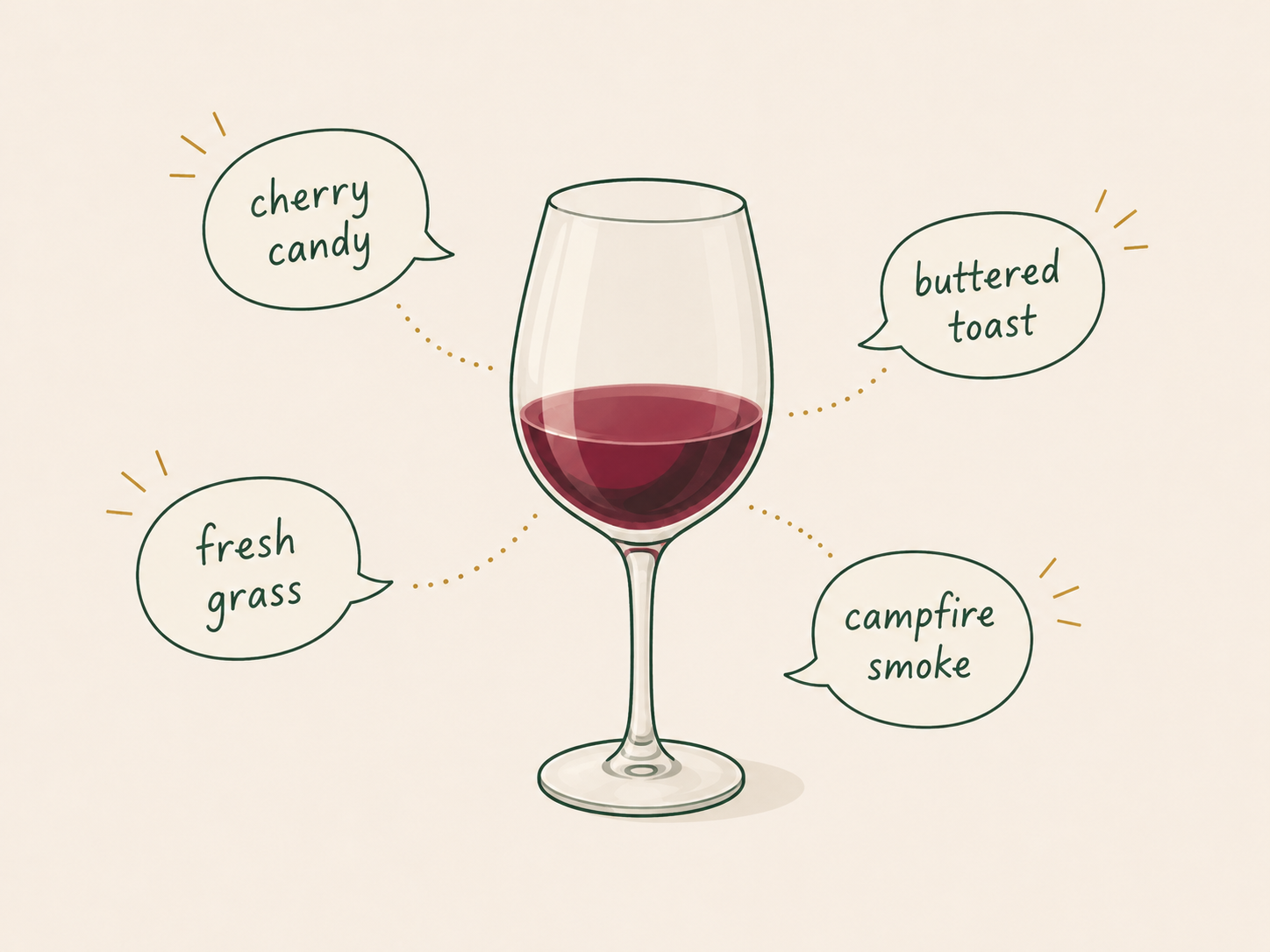
Formal wine language is useful, but personal language is memorable.
Use whatever words help you recognize the wine again.
These are all valid:
- Cherry candy
- Peach rings
- Lemon cleaner
- Apple skin
- Blackberry pie
- Campfire smoke
- Vanilla frosting
- Buttered popcorn
- Fresh-cut grass
- Green pepper
- Old books
- Rain on pavement
- Mushrooms after rain
- Grandma's spice cabinet
Step 10: Know When Something Might Be Wrong
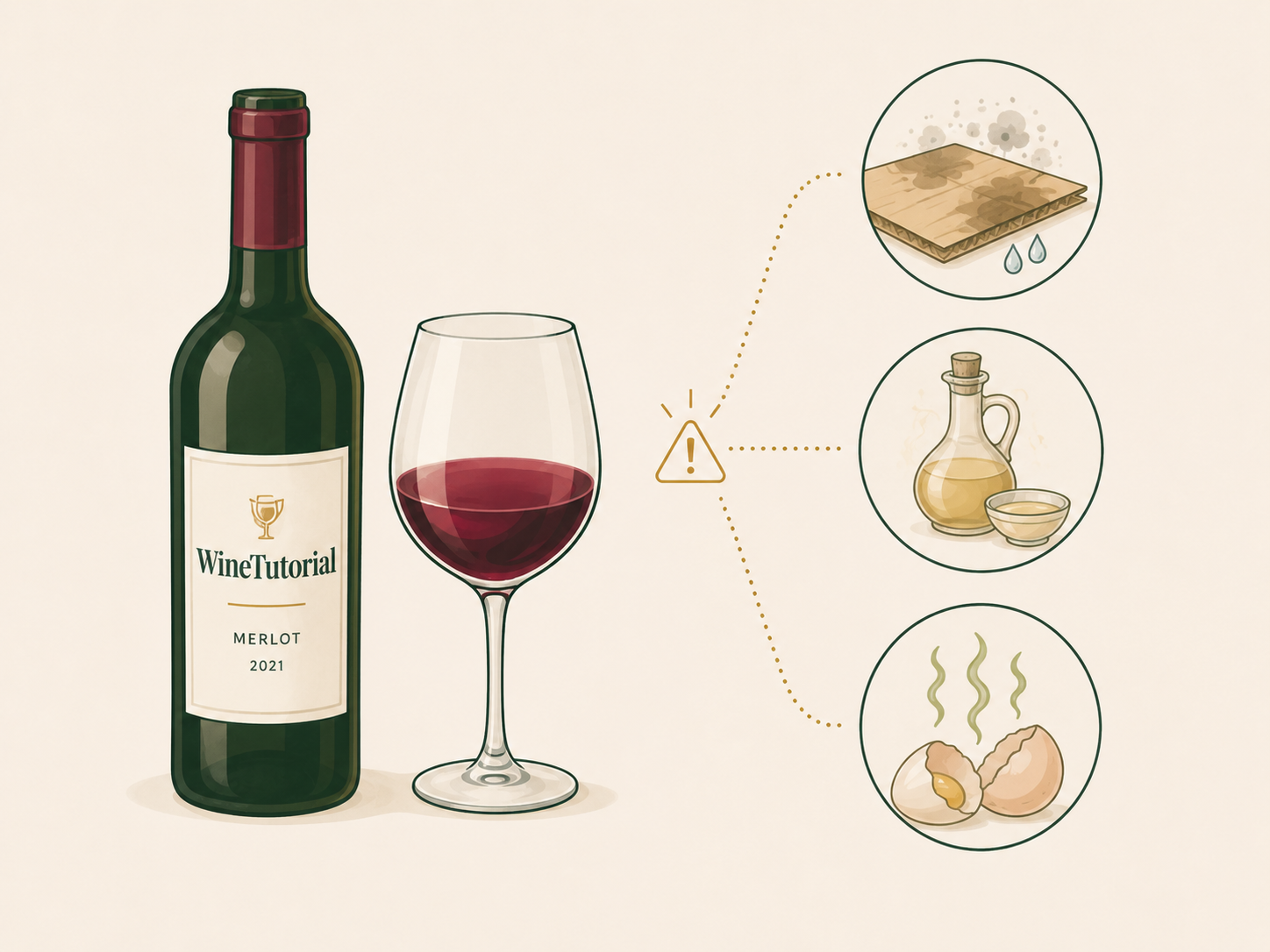
Not every strange flavor is a flaw. Some wines are supposed to be earthy, funky, smoky, oxidative, or savory.
But some smells can suggest a problem.
| Possible Problem | Common Clues |
|---|---|
| Cork taint | Wet cardboard, musty basement, moldy newspaper |
| Oxidation | Flat fruit, bruised apple, stale nuts, browning |
| Volatile acidity | Vinegar, nail polish remover, sharp sour smell |
| Reduction | Rotten egg, rubber, struck match, cabbage, garlic |
| Heat damage | Cooked fruit, stewed flavor, dullness, pushed cork |
| Brettanomyces overload | Barnyard, horse blanket, bandage, medicinal smell |
A flawed wine is usually not dangerous, but it may not be enjoyable.
If you are at a restaurant and a wine smells strongly musty, vinegary, rotten, or clearly off, it is reasonable to ask someone to check the bottle.
Beginner Practice Exercise
Round 1: Broad Category
Choose one or two: Fruity, Floral, Herbal, Spicy, Oaky, Creamy, Earthy, Savory, Nutty, Smoky, Sweet, Funky
Round 2: Fruit Type
Choose one: Red fruit, Black fruit, Citrus, Orchard fruit, Stone fruit, Tropical fruit, Dried fruit, Not very fruity
Round 3: Texture
Choose one or two: Crisp, Smooth, Creamy, Tannic, Light, Full, Sweet, Dry, Warming, Refreshing
Round 4: Personal Memory
Finish this sentence:
This wine reminds me of ________.
That answer is your tasting note.
Want to turn your tasting note into a written result? Try the Wine Flavor Finder.
A Beginner Wine Flavor Cheat Sheet
| If You Taste... | Try Saying... | It Might Point Toward... |
|---|---|---|
| Cherry, raspberry, cranberry | Red fruit | Pinot Noir, Gamay, Sangiovese, Grenache |
| Blackberry, plum, cassis | Black fruit | Cabernet Sauvignon, Malbec, Syrah, Merlot |
| Lemon, lime, grapefruit | Citrus | Sauvignon Blanc, Riesling, Albariño, Pinot Grigio |
| Apple, pear | Orchard fruit | Chardonnay, Chenin Blanc, Pinot Gris, Champagne |
| Peach, apricot | Stone fruit | Riesling, Viognier, Chenin Blanc, Gewürztraminer |
| Pineapple, mango | Tropical fruit | Warm-climate Chardonnay, Viognier, aromatic whites |
| Vanilla, toast, cedar | Oak | Barrel-aged red wines, oaked Chardonnay |
| Butter, cream | Creamy | Malolactic fermentation, lees aging, oaked Chardonnay |
| Bread, biscuit, brioche | Yeasty | Champagne, sparkling wine, lees-aged wines |
| Grass, bell pepper | Green / herbal | Sauvignon Blanc, Cabernet Franc, Carménère |
| Mushroom, wet leaves | Earthy | Pinot Noir, Nebbiolo, aged red wines |
| Leather, tobacco | Savory / aged | Aged reds, Rioja, Bordeaux-style blends, Nebbiolo |
| Honey, marmalade | Sweet / developed | Dessert wines, aged whites, botrytized wines |
| Wet cardboard | Possible flaw | Cork taint |
The Bottom Line
Wine tasting gets easier when you stop trying to be correct and start trying to be specific.
You do not have to identify every flavor. You do not have to agree with the bottle, the critic, or the person next to you.
Start with what you notice.
Name it in your own words.
Then ask what might have created it.
That is how you learn wine flavors.