How to Serve Wine
 By
By - How to approach how to serve wine with confidence.
- Common mistakes and how to avoid them.
- When and how to apply this in real situations.
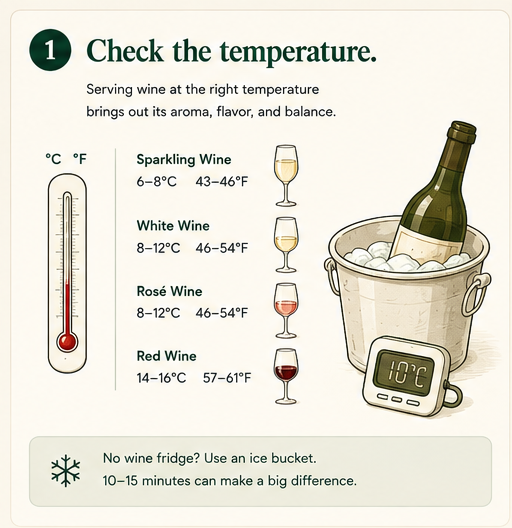
Check the temperature
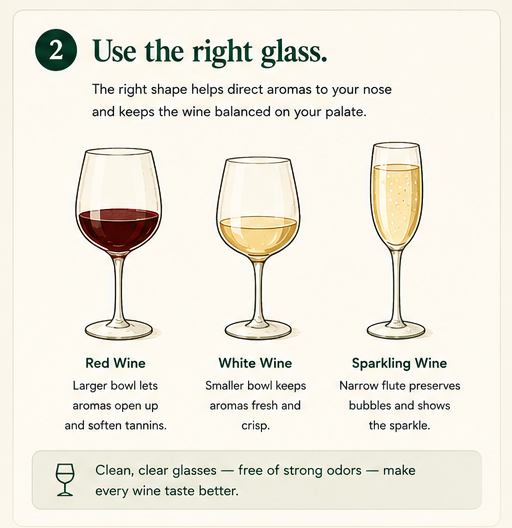
Use the right glass
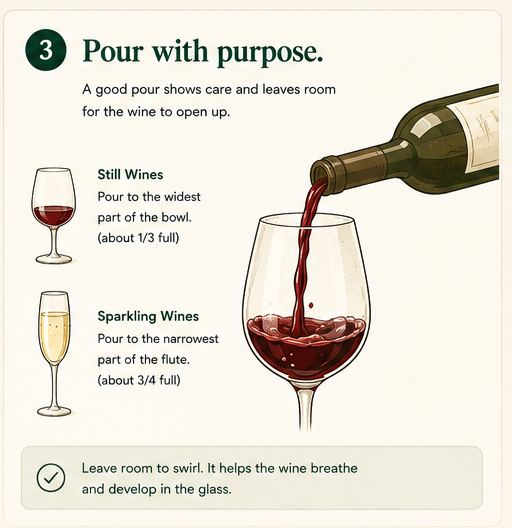
Pour with purpose
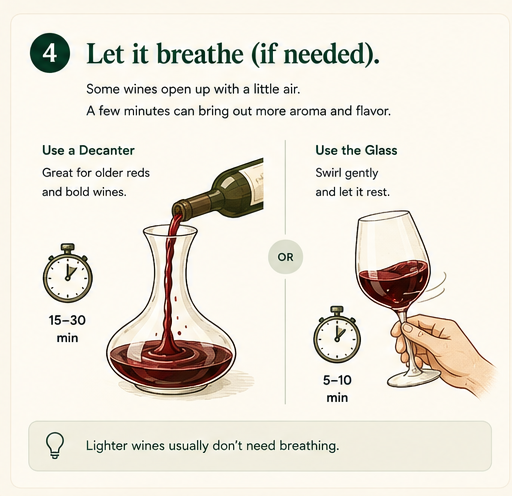
Let it breathe (if needed)
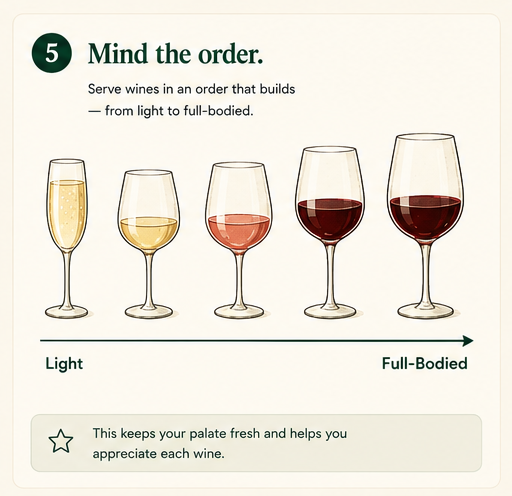
Mind the order
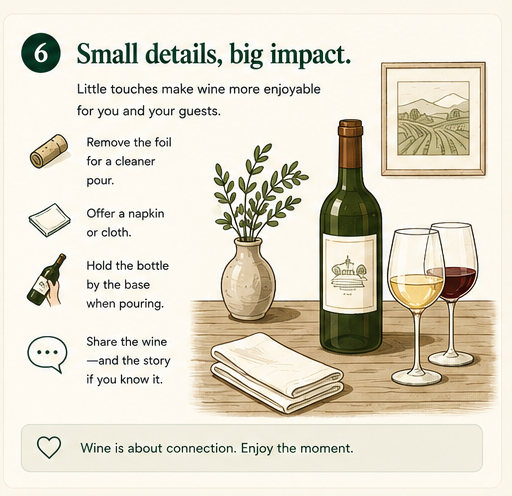
Small details, big impact
The way you serve wine has a genuine impact on how it tastes. Temperature, glassware, and aeration are not ceremonial details — they change what's actually happening in the glass.
Serving Temperature
Temperature is the most important factor in serving wine well. Wine that is too cold mutes its aromas and can make tannins feel harsh. Wine that is too warm loses freshness and can taste flat or alcoholic.
| Wine Style | Serving Temperature |
|---|---|
| Sparkling wine / Champagne | 40–50°F (4–10°C) |
| Light white wine (Sauvignon Blanc, Pinot Grigio) | 45–50°F (7–10°C) |
| Full-bodied white wine (oaked Chardonnay) | 50–55°F (10–13°C) |
| Rosé | 50–55°F (10–13°C) |
| Light red wine (Pinot Noir, Gamay) | 55–60°F (13–16°C) |
| Full-bodied red wine (Cabernet, Syrah) | 60–65°F (16–18°C) |
| Fortified wine (Port, Sherry) | 55–65°F (13–18°C) |
A practical rule: pull red wines out of a 70°F room about 30 minutes before serving if you want to chill them slightly. Put white wines out of the refrigerator about 15 minutes before serving to let them warm up a bit. Most home refrigerators run around 38–40°F, which is too cold for white wine service.
Glassware
A clean, clear, thin-rimmed glass makes wine more enjoyable. The shape of the glass affects how the aromas collect and how the wine reaches your palate. Broader bowls (as used for red wine) allow more surface area for the wine to breathe. Narrower bowls (for white wine and sparkling wine) concentrate the aromas toward the nose.
A large, tulip-shaped glass works reasonably well for most wines. You don't need a different glass for every grape variety. What matters more than specialized glassware is that the glass is clean, unscented (avoid washing with strongly scented detergent), and large enough to swirl without spilling.
Aeration and Decanting
Many red wines, and some whites, benefit from exposure to air before serving. This softens harsh tannins, opens up complex aromas, and generally makes the wine more approachable. Younger red wines with significant tannins often need an hour or more of aeration to show their best. Very old wines, by contrast, should be treated more gently — prolonged exposure to air can cause fragile aromas to fade.
Decanting is the traditional method: pour the wine into a wide-bottomed vessel an hour or more before serving. This also separates any sediment (common in aged red wines) from the clear wine above it.
A wine aerator — a tool designed to introduce air into wine as it's poured — can achieve a similar result more quickly. It's a practical option when you don't have time to decant.
Swirling and Smelling
Swirling wine in the glass increases the surface area exposed to air, releasing aromatic compounds. It's not affectation — it genuinely helps you smell more of what's in the glass. For sparkling wine, skip the swirl: it releases bubbles prematurely and diminishes the effervescence.
Smell the wine before you taste it. Much of what we perceive as flavor is actually aroma. Taking a moment to smell the wine first gives you a richer experience when you do taste it.
Pouring
Fill wine glasses about one-third full — never more than half. This leaves room to swirl and concentrate the aromas. For sparkling wine, a flute or tulip glass is conventional, and pouring down the side of the glass rather than directly in minimizes the loss of bubbles.