 By
By 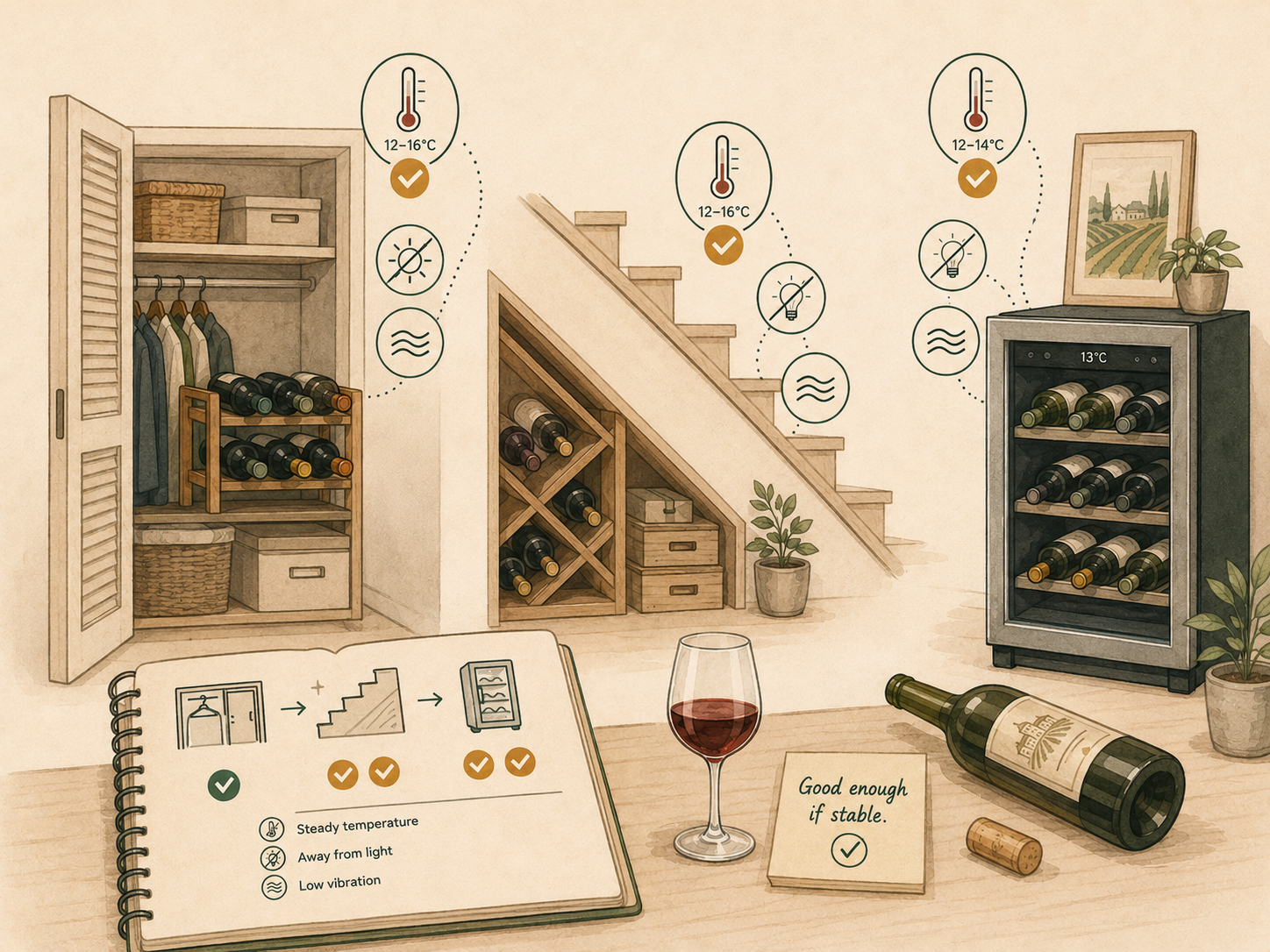
Most people do not have a wine cellar. That is fine. A useful collection can start with six bottles in a dark closet. The goal is not to imitate a château. The goal is to keep wine away from the things that ruin it.
The cheapest cellar is a stable spot you already own. An interior closet is often good. A basement can be good if it stays reasonably cool and does not smell musty or swing wildly with the weather. Put bottles in a box, low to the ground, away from heat vents and sunlight. That setup will not turn into a museum, but it can protect everyday bottles and modest aging projects.
The next step is a wine fridge. A small unit can make sense when you are keeping bottles for a year or more, buying multiples, or living somewhere warm. It does not have to be enormous. A reliable small fridge beats a large unstable rack. Countertop units help with a few bottles; larger cabinets or under-stair systems help when the collection becomes real.
Offsite storage is for bottles whose value, age, or quantity makes home storage risky. It costs money and removes convenience, but it can protect serious wine from apartment heat, moves, and power worries. It is not necessary for a starter collection.
Avoid the obvious danger zones: kitchens, sunny rooms, garages with seasonal swings, hot closets near mechanical equipment, and decorative racks that trade stability for display.
The right move is the cheapest stable option that matches the wine you own. Upgrade when the collection earns it, not when the fantasy of collecting tells you to spend.
What you should know after this lesson
After this lesson you should be able to build practical home storage in tiers, from a stable closet to a wine fridge or offsite storage when the bottles justify it.