 By
By 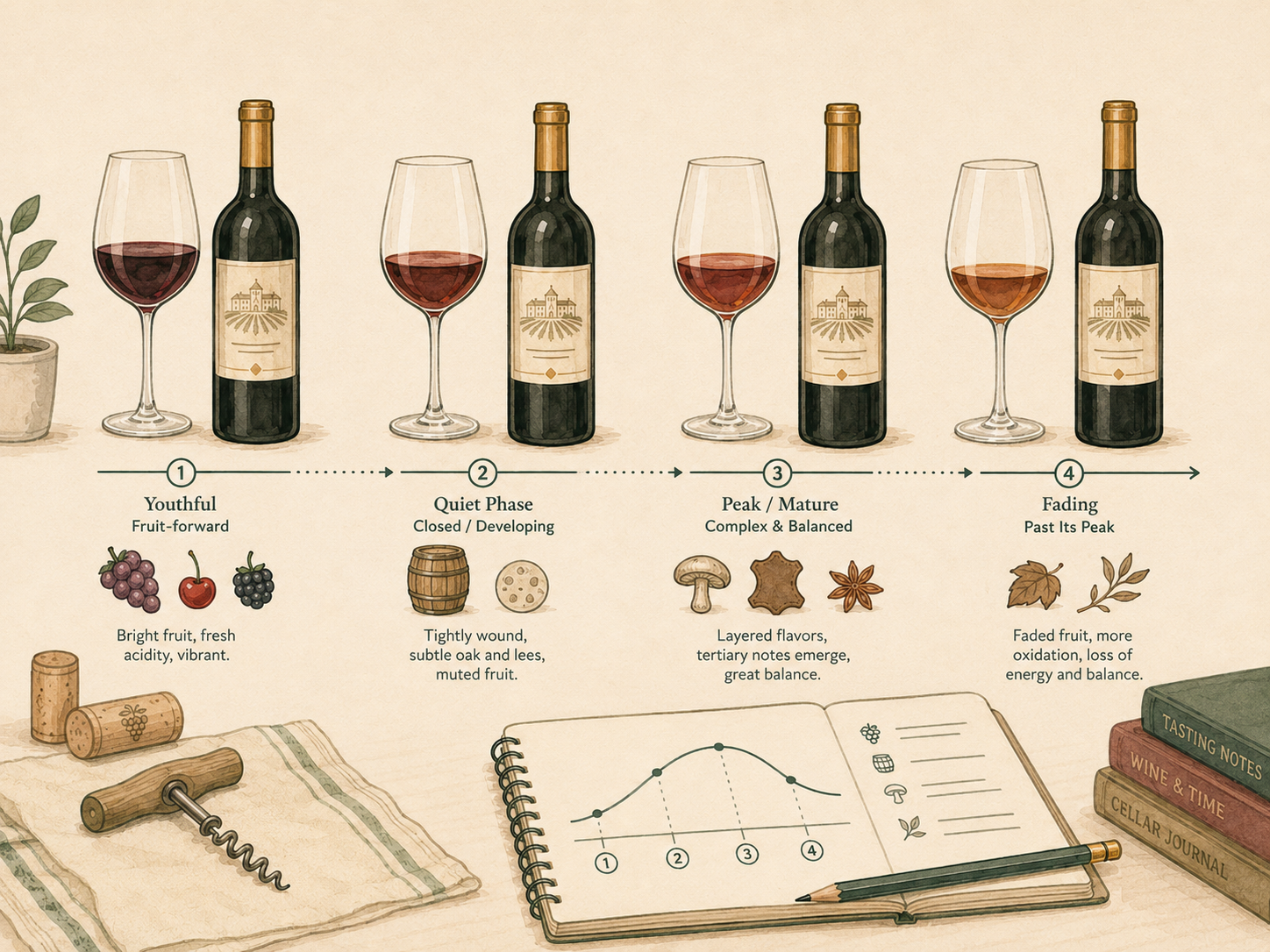
Aging is not a straight climb. A wine does not become better every month you ignore it. It changes shape. Sometimes that change is beautiful. Sometimes the wine passes through a quiet stretch. Sometimes it simply runs out of energy.
Young wine often starts with primary fruit: lemon, apple, peach, cherry, blackberry, plum. If the wine used oak, lees, or other cellar choices, those notes may sit beside the fruit: toast, vanilla, spice, cream, bread dough, smoke, or a richer texture. Those are not signs of old wine. They are signs of how the wine was made before release.
With time, the fruit usually becomes less direct. Fresh cherry can move toward dried cherry. Apple can become honeyed or nutty. Reds may develop leather, tobacco, earth, mushroom, forest floor, dried herbs, or savory spice. Whites may deepen toward honey, nuts, petrol, wax, or toast. The point is not that old flavors are better. They are different.
Some wines also shut down for a while. The fruit seems muted, the structure feels louder, and the bottle gives less pleasure than it did earlier or will later. This is one reason drinking windows are guesses, not laws.
The honest method is to taste at intervals. Buy more than one bottle when you can. Open one young, one later, and one when you think it might be at its peak. A cellar teaches through subtraction as much as reward. The only real curve is the one your bottle draws in your glass.
What you should know after this lesson
After this lesson you should be able to understand aging as a changing curve, not a guaranteed upgrade, and know why tasting over time matters.