 By
By 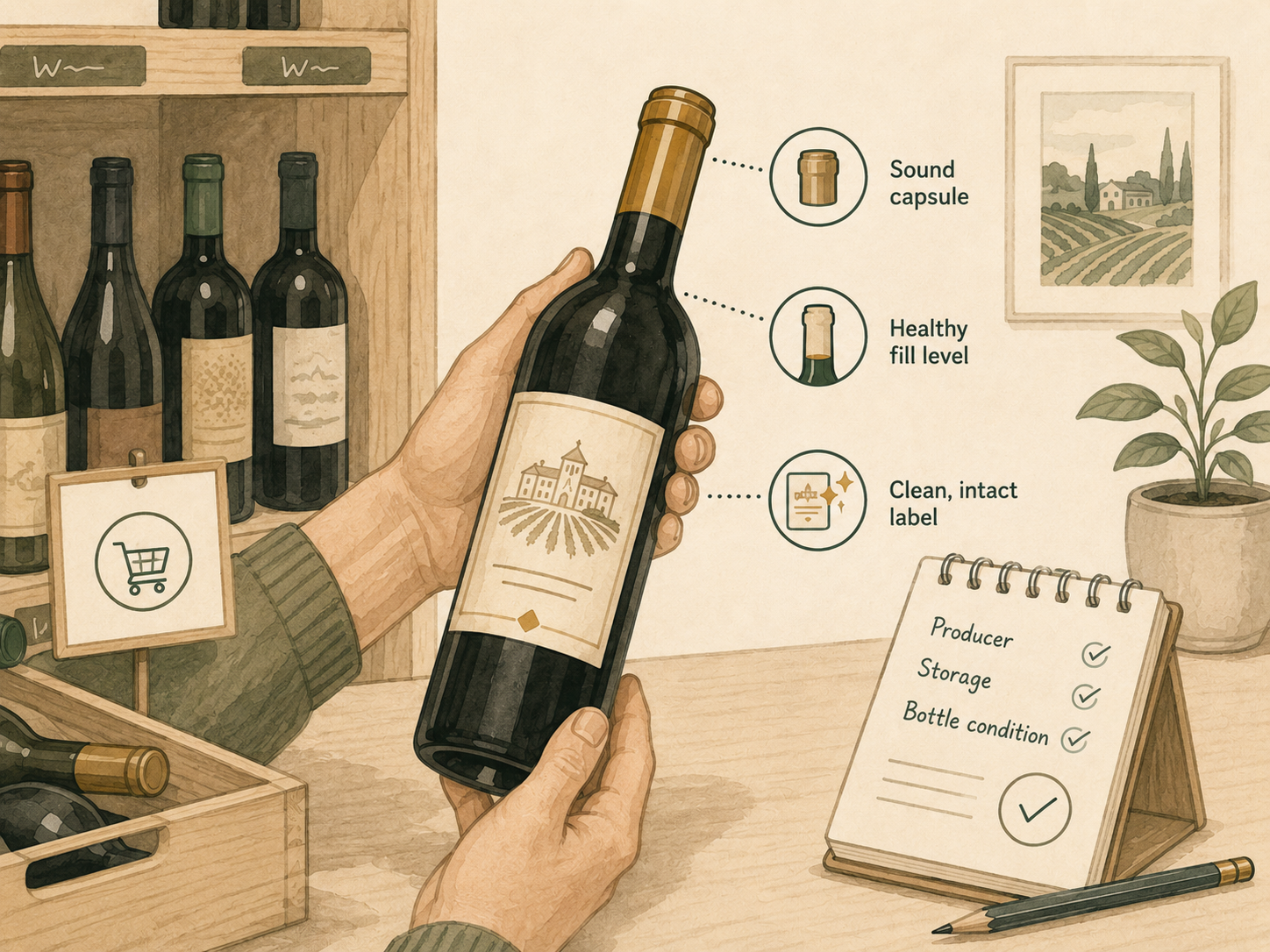
A wine bought for aging has two histories. One is the vineyard, producer, vintage, and style. The other is the route the bottle took before it reached your hands. The second history can ruin the first.
Buy from people who care about storage. Good retailers, producer-direct offers, trusted importers, and serious auction houses all have a reason to protect bottles. That does not make every bottle perfect. It does mean provenance is part of what you are paying for. A great name stored badly is a worse buy than a good name stored well.
Look at the bottle before you fall in love with the label. Fill level matters, especially on older wine. A high fill is reassuring. A lower shoulder on an old bottle can be normal in some cases, but it asks for caution because it may signal evaporation, leakage, or long storage trouble. A stained label is not automatically bad. A leaking capsule, pushed cork, sticky neck, or cooked-looking bottle is a bigger warning.
Producer model gives more context, not a quality ranking. An estate bottle may tell a tight story of place. A negociant bottle may reflect selection, blending, and access to growers. A cooperative bottle may represent many farmers and still be excellent. Small is not automatically good. Large is not automatically careless.
For long-haul buying, boring discipline helps. Choose wines with a track record, buy from sources with a storage story, avoid bottles that look abused, and keep records when they arrive. The romance starts after the practical questions are answered. Cellaring begins at purchase, not in your closet.
What you should know after this lesson
After this lesson you should be able to evaluate provenance, bottle condition, seller reliability, and producer model when buying an aging bottle.