 By
By 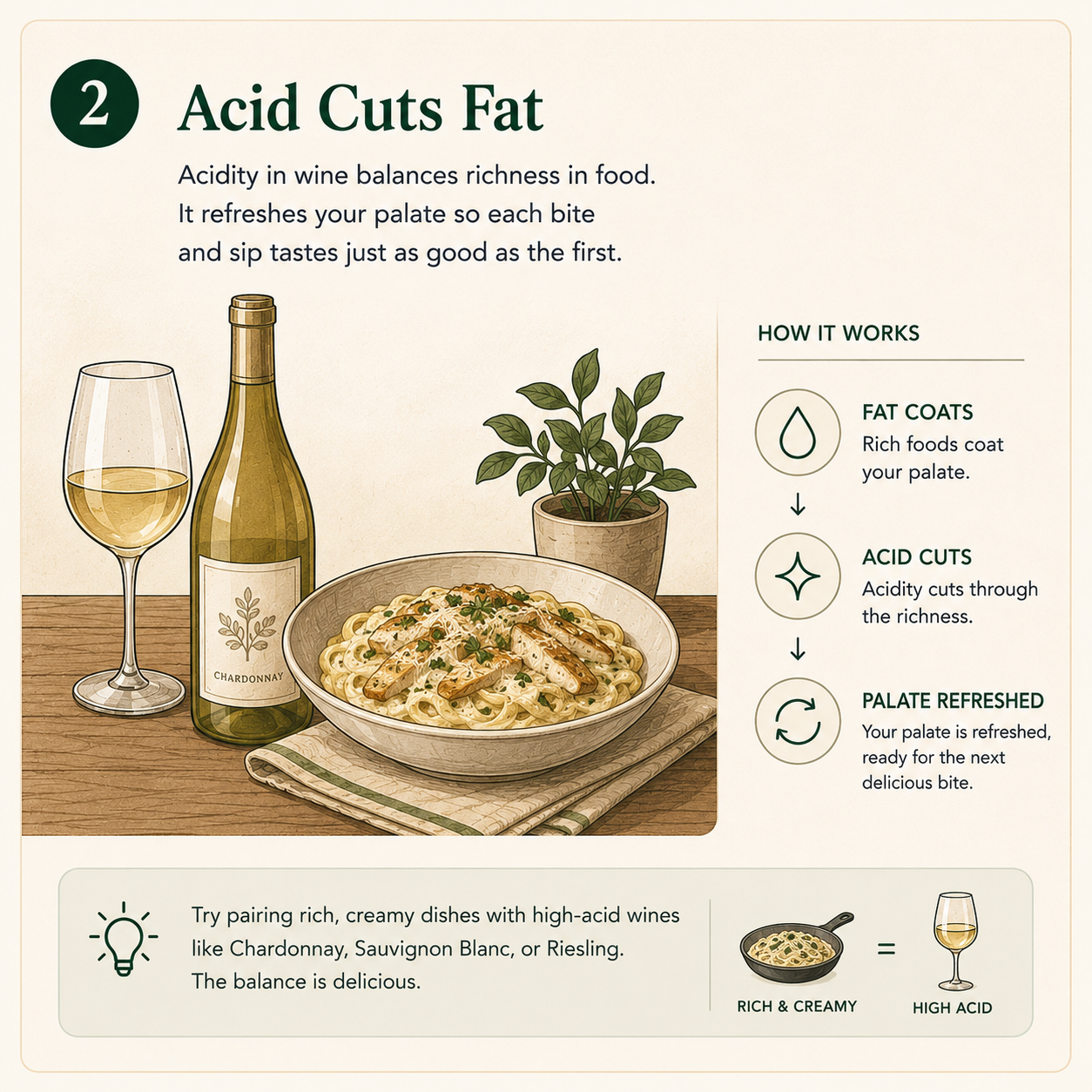
Fat is why butter, cream, cheese, and frying work. It carries flavor and gives food a soft, rich feel. The problem is that fat also hangs around. After a few bites, your mouth can feel coated. A wine with real acid resets the palate so the next bite tastes like the first one again.
Think of acid like lemon on fried fish. The lemon does not erase the fish or the crust. It sharpens the whole plate. Wine can do the same job, especially when it has enough freshness to cut through the richness.
High-acid whites are the obvious move. Sauvignon Blanc, Riesling, Chenin Blanc, Pinot Grigio in a lean style, and many unoaked Chardonnays can handle butter, cream, or fried texture. Dry sparkling wine is even more useful because bubbles add scrub along with acid. That is why sparkling wine works with potato chips, fried chicken, tempura, and soft cheeses.
Lighter reds can help too, especially with fatty foods that also have savory or earthy flavors. Pinot Noir, Gamay, and lighter Sangiovese can refresh without turning the meal heavy. The trick is avoiding too much oak, heat, or weight when the dish already feels rich.
Acid does not mean sour wine. It means the wine has enough lift to keep the table moving. If the dish is creamy, buttery, fried, or cheesy, reach first for brightness. When in doubt, take one bite, imagine squeezing lemon on it, and ask whether that would help. If yes, acid is probably the job.
What you should know after this lesson
After this lesson you should be able to explain why high-acid wines make rich foods feel cleaner and more balanced.