 By
By 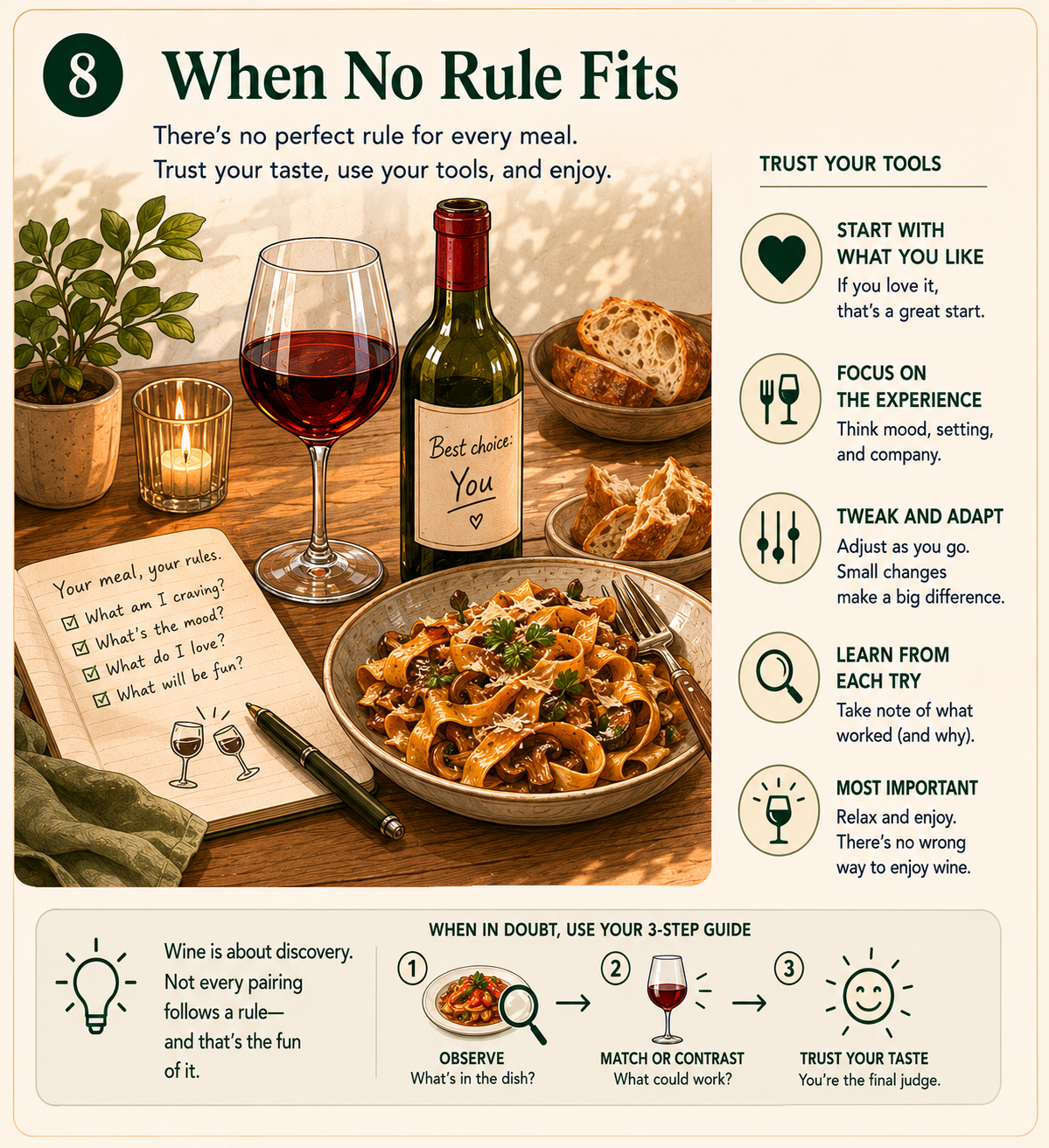
Some meals refuse to cooperate. The table orders salad, fries, roast chicken, spicy noodles, and a burger. The sauce is sweet, the dressing is sharp, and nobody wants to debate grapes. This is where you need a fallback, not a theory.
Start with dry sparkling wine. It is the most useful problem-solver at the table. Acid handles fat. Bubbles refresh salt and fried texture. Moderate alcohol keeps heat from getting louder. The flavor is usually neutral enough for vegetables, seafood, poultry, snacks, and cheeses. It will not be perfect with every bite, but it rarely makes a meal worse.
The second fallback is a medium-bodied red with moderate tannin and good freshness. Think Pinot Noir, Gamay, lighter Grenache, Barbera, Mencía, or a balanced Sangiovese. This lane covers roast chicken, pork, mushrooms, burgers, tomato sauces, and many shared plates. It gives red-wine drinkers enough structure without turning every dish into a tannin problem.
Avoid the extremes when you are guessing. Very sweet, very oaky, very tannic, very high-alcohol, or very delicate wines can be great in the right place, but they are less forgiving. Fallback wine should be flexible. It should bend around the table.
If the meal is spicy, lean toward sparkling, off-dry white, or dry rosé. If the meal is heavy and savory, lean toward the medium red. If the meal is mostly fried or salty, sparkling stays first.
The point is not that rules are useless. The point is that rules are tools, and some tables need a general-purpose tool. Dry sparkling first. Medium-bodied red second. That pair will carry you through most strange menus.
What you should know after this lesson
After this lesson you should be able to use a reliable fallback pairing strategy when no single rule clearly applies.