 By
By 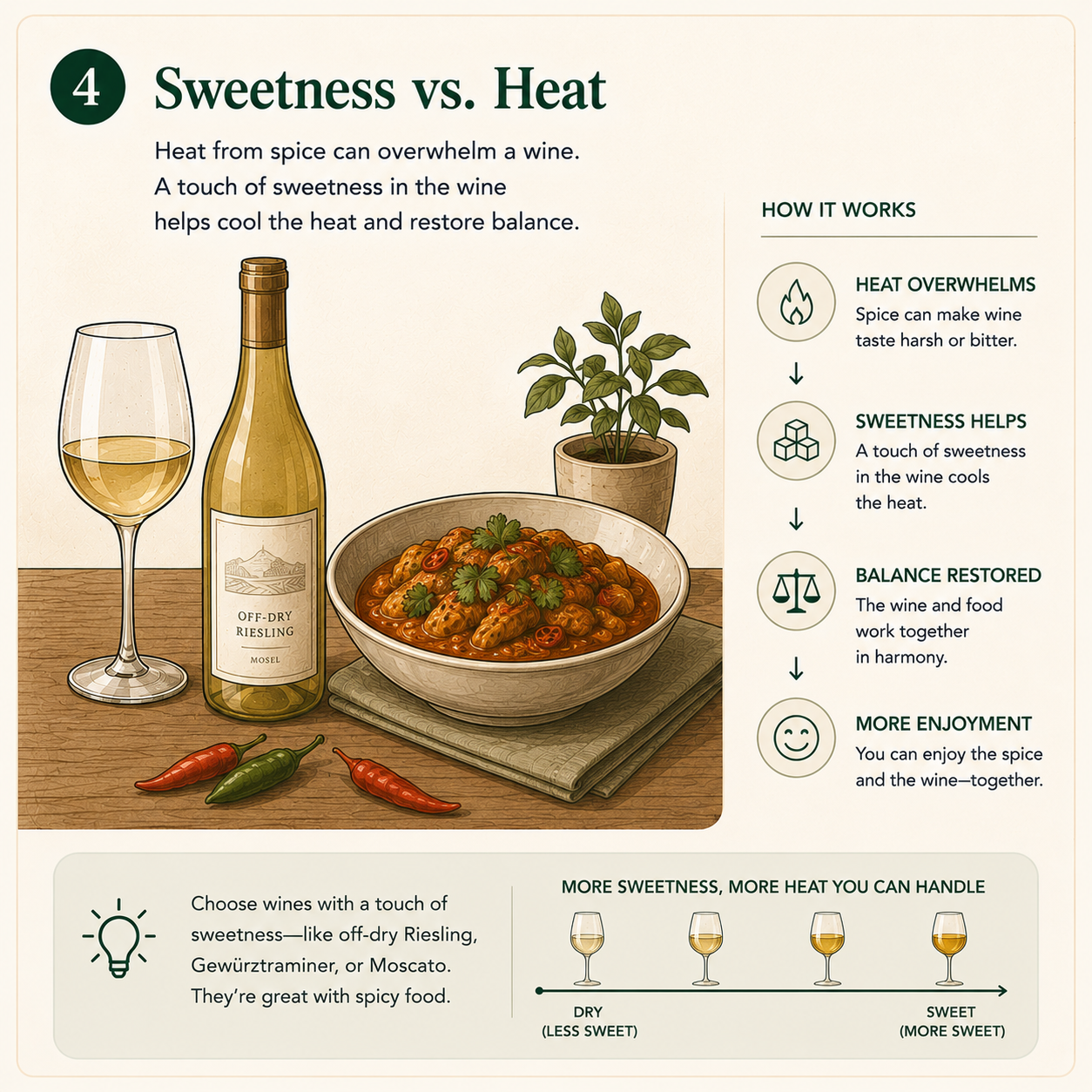
Heat in food is not just another flavor. It changes how wine feels. A high-alcohol red can make chile burn feel hotter. Heavy oak can taste clumsy. Firm tannin can turn scratchy. That is why the biggest, loudest bottle is often the wrong answer for spicy food.
A touch of sweetness is the classic rescue move. Off-dry Riesling, demi-sec Chenin Blanc, some Gewürztraminer, and lightly sweet sparkling wines can soften chile heat without making the meal taste like dessert. The sweetness does not need to be dramatic. It just needs to be present enough to cushion the spice.
Acid still matters. Sweetness without freshness can feel sticky beside food. The best spicy-food wines usually have both: a little sugar and a clean line of acid. That combination keeps the dish lively while reducing the sense of burn.
Dry wines can work when the dish is more aromatic than fiery. Dry rosé, crisp whites, lighter reds with low tannin, and dry sparkling wines can fit dishes with ginger, herbs, cumin, coriander, or mild chile. The drier the wine, the more you should watch alcohol and oak. Keep the wine fresh, not heavy.
The dish's sweetness matters too. Thai curry with coconut milk, barbecue sauce with sugar, and spicy glazed wings all need different handling than a dry chile rub. When the food has sweetness, the wine can taste sharper by comparison unless it has some fruit or sweetness of its own.
The practical rule: for real heat, start with low alcohol, high freshness, and possible off-dry sweetness. For mild spice, dry and bright can win.
What you should know after this lesson
After this lesson you should be able to choose between off-dry and dry wines when a dish brings chile heat.