 By
By 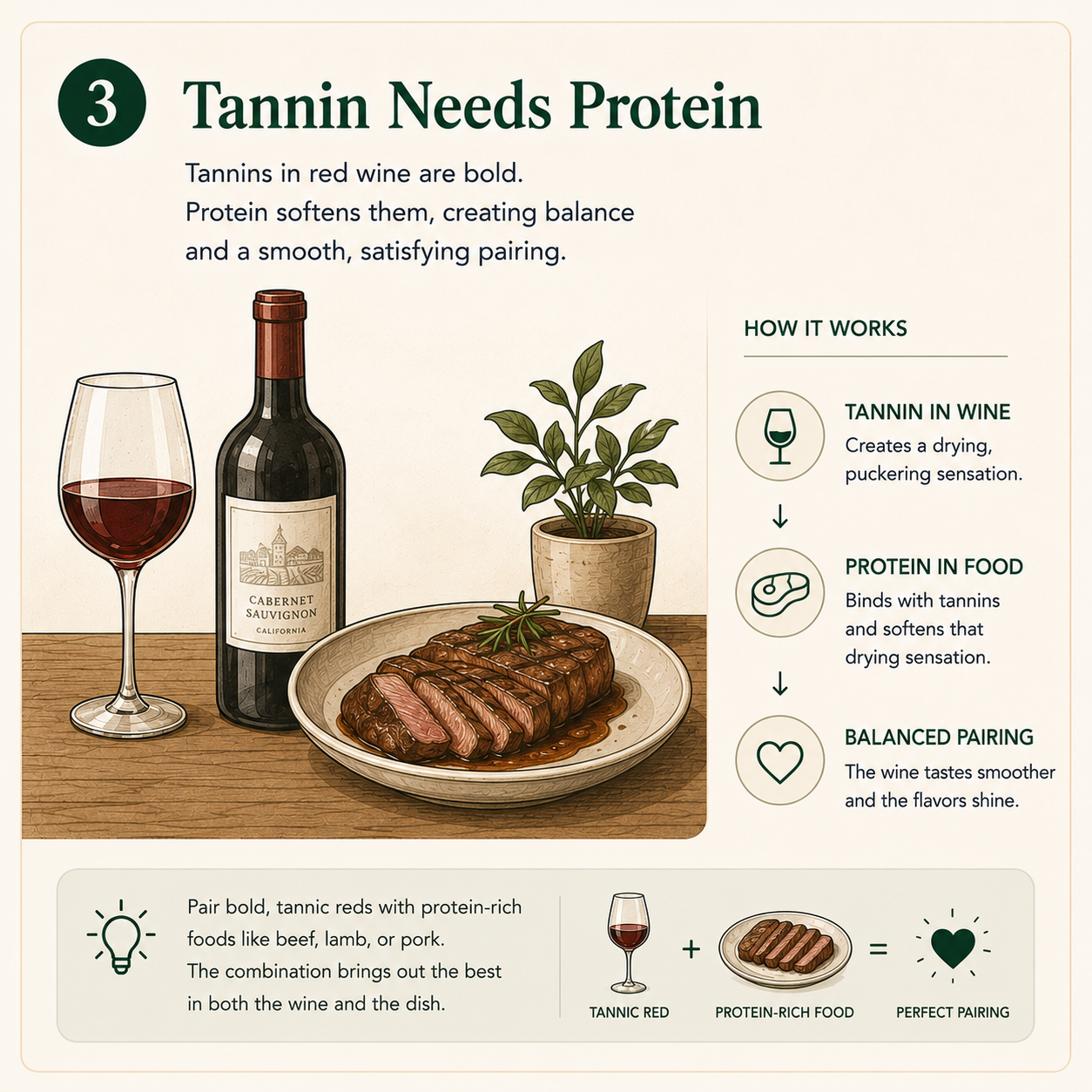
Tannin is not a flavor as much as a texture. It is the drying, firm pull you feel on your gums and tongue after drinking many red wines. Cabernet Sauvignon, Nebbiolo, Syrah, Malbec, and some young Sangiovese can all bring real grip.
That grip needs something to push against. Protein and fat are the usual partners. A tannic red with a grilled steak works because the meat gives the tannin a job. The wine feels less hard, and the food feels more savory. The same idea works with lamb, short ribs, burgers, aged cheeses, and mushrooms cooked with enough fat.
When tannin does not get support, it can dominate. Put a firm Cabernet next to a green salad and the wine often tastes more bitter. Put a young, grippy red next to delicate white fish and the fish can taste metallic or thin. Put heavy tannin next to chile heat and the heat can feel sharper.
This does not mean red wine only goes with meat. It means you need texture. Beans, lentils, mushrooms, eggplant, hard cheese, and roasted vegetables can work when they bring enough weight and savory depth. Olive oil helps. Char helps. Salt helps.
The mistake is matching color to color instead of structure to structure. "Red with red meat" is too blunt. Better: firm tannin wants protein, fat, salt, and browned flavor. If the plate is lean, acidic, spicy, or delicate, choose a lighter red, a softer red, or skip red entirely. Tannin is useful, but it needs the right job.
What you should know after this lesson
After this lesson you should be able to predict when tannin will soften with food and when it will become the problem.