 By
By 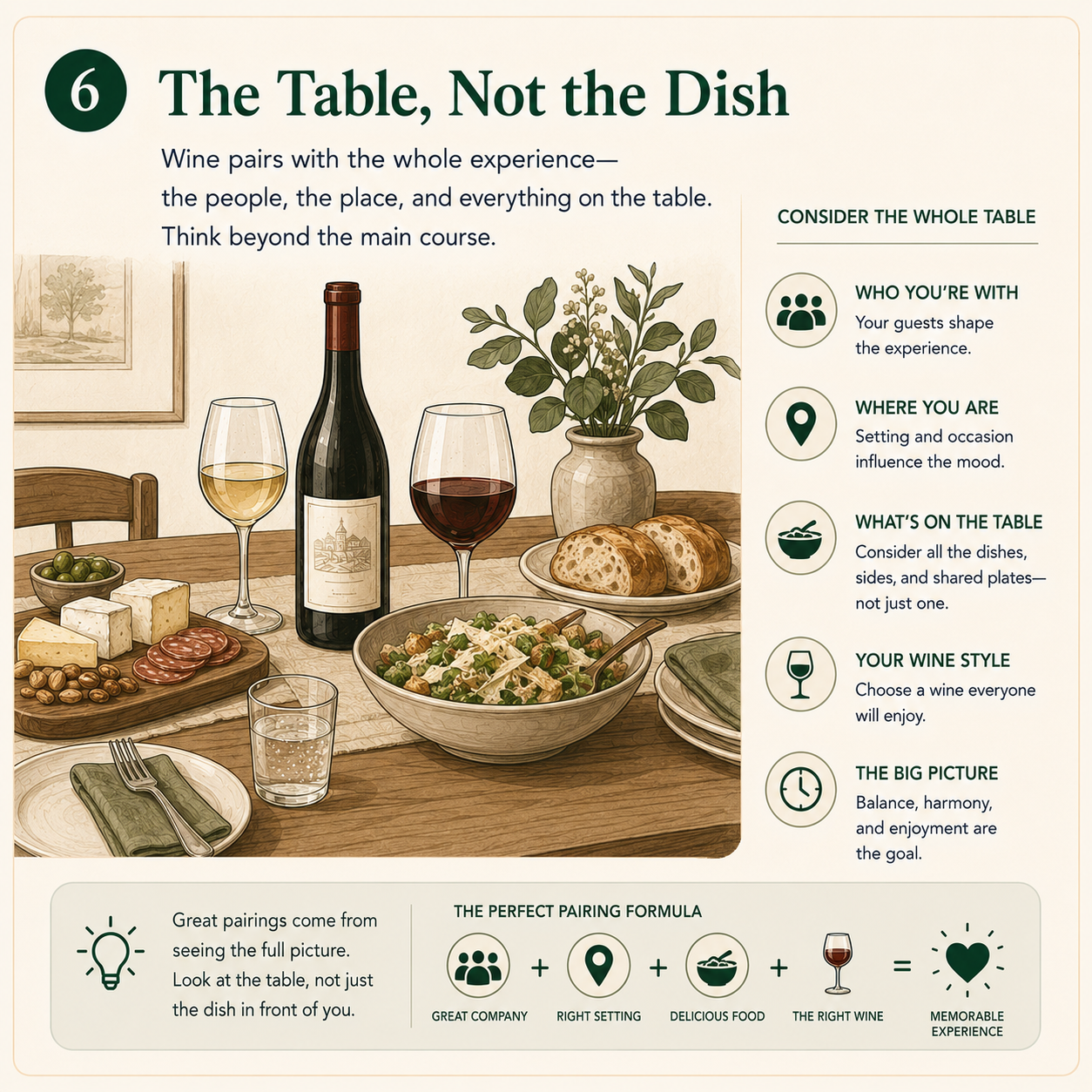
Restaurant pairing advice often pretends there is one dish and one bottle. Dinner is messier. A plate may have salad, protein, starch, sauce, char, acid, and sweetness all at once. A shared table may have fish, steak, vegetables, and fries in the same order. The goal is not perfection. The goal is fewer clashes.
Start with the loudest risk. Salad dressing can make a soft red taste flat. Chile heat can make alcohol feel rough. Sweet glaze can make dry wine taste thin. Cream sauce can bury delicate wine. Find the thing most likely to break the pairing and choose around that.
Then look for the middle lane. Dry sparkling wine, crisp whites, dry rosé, and lighter reds solve more mixed tables than heavy reds or very oaky whites. They have enough freshness to handle salad and fat, enough flavor for simple proteins, and enough restraint not to bully vegetables.
Sauce usually matters more than starch. Pasta with tomato sauce wants acid. Pasta with cream wants acid plus body. Pasta with pesto wants freshness and herbal lift. Rice is rarely the issue; the sauce is.
When the table splits hard, choose two bottles if the group size supports it: one bright white or sparkling, one medium-bodied red. That covers most dishes without forcing every plate into the same lane. If one bottle has to carry the table, prioritize freshness and moderate weight.
The host move is to avoid the bottle that only works with one bite. Pick the wine that behaves well with the most things on the table. Good pairing is not a magic trick. It is risk management with pleasure attached.
What you should know after this lesson
After this lesson you should be able to choose wine for a mixed table instead of chasing a perfect single-dish match.