 By
By 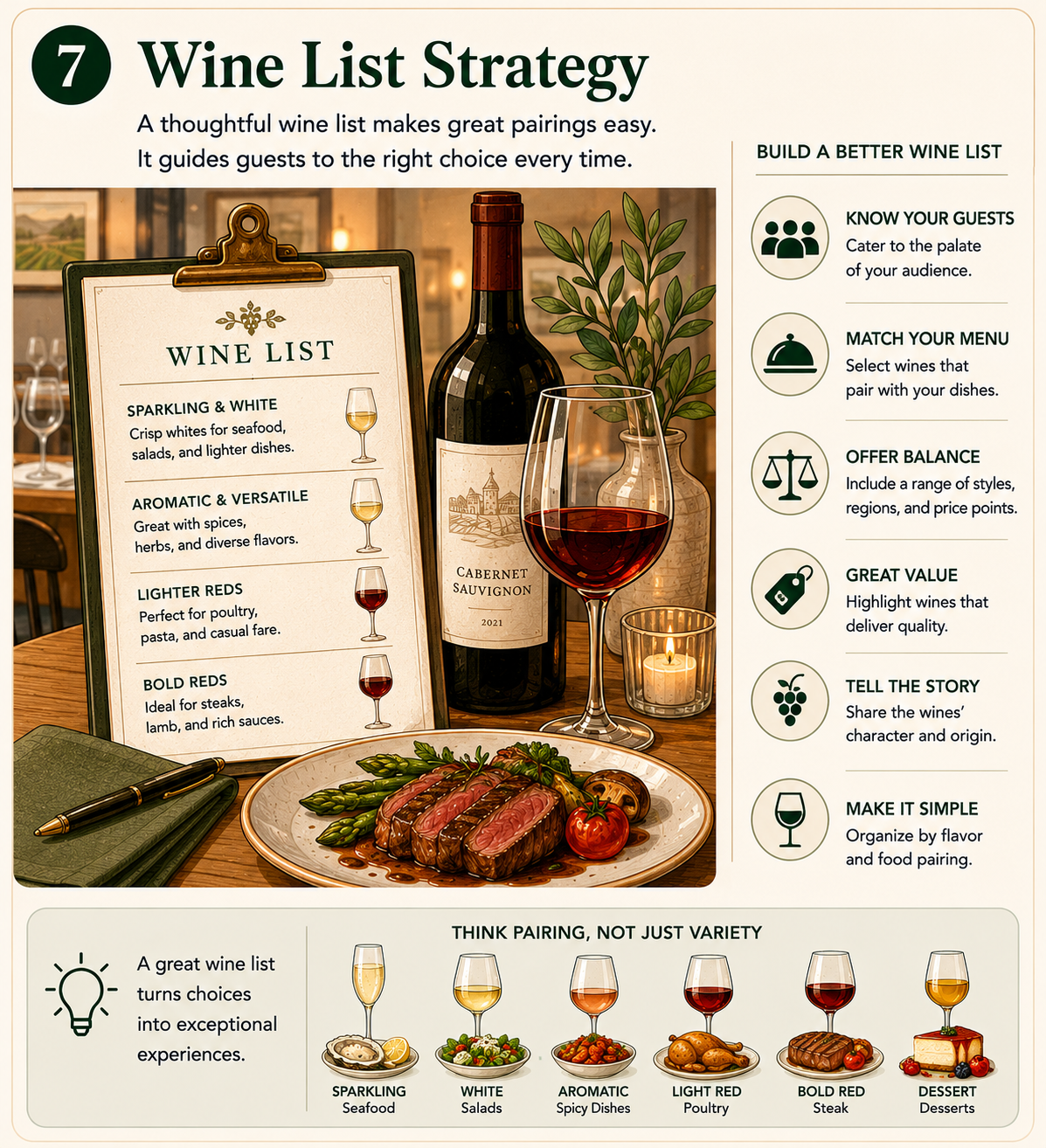
A wine list gets easier when you stop reading it like a scoreboard. You are not looking for the most impressive bottle. You are looking for the bottle that fits the table, the mood, and the budget everyone agreed to.
First, name the meal. Is the table mostly seafood, poultry, vegetables, red meat, spicy food, or a mix? Then name the job: acid for fat, softness for spice, tannin for protein, sweetness for heat, freshness for mixed plates. Now you have a style lane before you have a label.
Second, use the list structure. Restaurants often group by region, grape, weight, or color. If you do not know the producer, look for clues: "crisp," "mineral," "light-bodied," "skin-contact," "oak," "reserve," or "old vines." These words are not guarantees, but they help you ask better questions.
Third, ask the server in useful language. Do not say, "What is good?" Say, "We need a bright white for fried seafood and salad," or "We need a red with enough body for short ribs but not too much oak." That gives the staff a target.
Fourth, avoid fame pressure. Famous regions can be excellent, but the list may have a quieter option that fits the dish better. Price does not automatically solve pairing. Fit solves pairing.
When nothing is obvious, choose versatility. Dry sparkling, crisp white, dry rosé, Pinot Noir, Gamay, or a medium-bodied Italian red can rescue many tables. The confident move is not knowing every bottle. It is knowing how to describe the job.
What you should know after this lesson
After this lesson you should be able to navigate a restaurant wine list by style and pairing job rather than by reputation.